
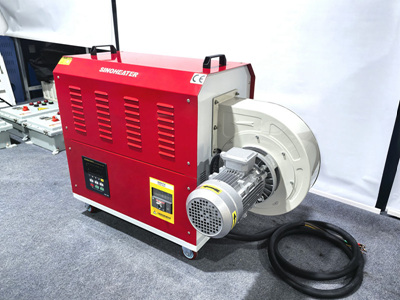
Anti-Interference Inspection for Heaters in RF-Disturbed Environments
Common RF Interference Sources in Industrial Settings
RF interference in industrial environments often stems from high-power communication equipment, such as wireless base stations, Wi-Fi routers, and mobile devices. These sources emit electromagnetic waves in the 30 MHz–6 GHz range, which can propagate through air or conductive paths like power lines. For example, a factory using multiple wireless networks for automation may experience overlapping frequency bands, creating unintended interference. Additionally, high-voltage machinery like variable-frequency drives (VFDs) or induction heaters generate harmonic distortions that couple into nearby circuits, disrupting sensitive electronics. Even everyday devices, such as smartphones or Bluetooth-enabled tools, can introduce transient spikes when operating in close proximity to heaters.
Another critical source is atmospheric noise, including lightning discharges or solar flares, which produce broadband electromagnetic pulses. These natural phenomena are less predictable but can cause severe disruptions in unshielded systems. Understanding these sources helps prioritize inspection areas, such as checking heater control panels near VFDs or ensuring proper spacing between wireless access points and heater wiring.
Key Components Susceptible to RF Interference
Temperature Sensors and Control Modules
Thermal sensors, such as thermocouples or RTDs, are vulnerable to RF-induced voltage fluctuations. In a case study, a manufacturing plant reported erratic temperature readings from heaters located near a 5G base station. The interference caused the control system to misinterpret sensor outputs, leading to inconsistent heating cycles. This highlights the need to inspect sensor wiring for proper shielding and grounding. Control modules with analog inputs are particularly at risk, as RF noise can couple into unfiltered signal lines, causing drift or false triggers.
Power Supply Units and Communication Interfaces
Heaters relying on switch-mode power supplies (SMPS) are prone to conducted emissions, where RF noise travels along power lines. For instance, a heater with an unshielded SMPS may inject harmonic distortions into the facility’s electrical grid, affecting other equipment. Similarly, communication interfaces like RS-485 or Ethernet ports can experience data corruption if unprotected. In one incident, a heater’s Ethernet link dropped packets during peak RF activity, disrupting remote monitoring. Inspecting power filters and using optically isolated communication channels can mitigate these risks.
Motor Drives and Actuators
Heaters equipped with variable-speed fans or pumps use motor drives that generate electromagnetic emissions. If these drives lack proper filtering, their switching frequencies can interfere with nearby control circuits. A textile factory observed heater motors causing sporadic failures in adjacent PLCs due to inadequate shielding. During inspections, focus on motor drive enclosures, ensuring they meet EMC standards for radiated emissions. Additionally, verify that actuator feedback lines are twisted-pair cables to reduce crosstalk.
Step-by-Step Post-Interference Inspection Guide
Visual and Physical Examination
Begin by inspecting the heater’s enclosure for signs of RF ingress, such as loose seams, cracked gaskets, or unsealed cable entries. Use a handheld RF field strength meter to identify hotspots around the unit. Pay close attention to areas near antennas, ventilation grilles, or display panels, as these are common entry points. For example, a heater installed near a radio tower showed elevated field strengths at its ventilation slots, prompting the addition of conductive mesh screens.
Next, examine all cables for damage or improper routing. Ensure power, sensor, and communication lines are separated by at least 30 cm or routed through shielded conduits. In a pharmaceutical plant, repositioning heater cables away from fluorescent lighting fixtures resolved intermittent control faults caused by RF noise from ballasts.
Functional Testing Under Simulated Conditions
Conduct controlled tests to replicate the interference environment. Use a signal generator to inject RF noise into power or signal lines at frequencies matching known干扰 sources (e.g., 800 MHz for mobile networks). Monitor the heater’s performance for anomalies like erratic temperature control, motor stuttering, or communication dropouts. For instance, a heater failed to maintain setpoints during testing at 2.4 GHz, revealing inadequate filtering on its control board.
If possible, perform field tests in the actual干扰 environment. Deploy portable spectrum analyzers to correlate interference levels with heater behavior. A mining operation used this approach to identify that a nearby two-way radio system was causing heater shutdowns, leading to the installation of RF chokes on power lines.
Data Logging and Long-Term Monitoring
Install data loggers to capture temperature trends, power quality metrics, and error codes over time. Look for patterns like sudden spikes coinciding with RF-heavy activities, such as shift changes when workers use mobile devices. In a food processing facility, loggers revealed that heater overheating incidents aligned with daily Wi-Fi backup routines, prompting a rescheduling of network tasks.
For critical applications, implement real-time monitoring systems with alerts for abnormal conditions. These systems can trigger automatic shutdowns or adjustments to prevent damage. A chemical plant integrated RF sensors into its heater control loop, enabling dynamic filtering based on ambient noise levels.
By systematically addressing these areas, heaters can maintain reliable operation even in RF-dense environments, ensuring safety and productivity in industrial settings.


