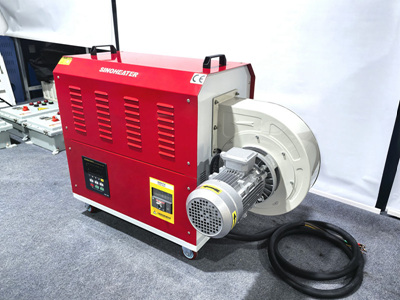
Radiation Protection Inspection for Heat Blowers After Use in Electromagnetic Radiation Environments
Common Sources of Electromagnetic Radiation in Industrial Settings
Electromagnetic radiation in environments where heat blowers operate often stems from high-power electrical equipment, wireless communication systems, or industrial processes. For example, arc welding machines, induction heaters, and large motors generate intense electromagnetic fields in the low-frequency (LF) to radio-frequency (RF) range. These fields can propagate through air or conductive paths, affecting nearby electronics. In a manufacturing plant, arc welding operations near a heat blower caused erratic temperature control due to induced currents in sensor wiring.
Wireless systems like Wi-Fi, Bluetooth, and cellular networks also contribute to RF radiation, especially in the 2.4 GHz and 5 GHz bands. A logistics warehouse reported heater malfunctions after installing a high-density Wi-Fi system, traced to interference coupling into control circuits. Additionally, natural phenomena such as solar flares or lightning storms produce transient electromagnetic pulses (EMPs) that can disrupt unshielded equipment. Identifying these sources helps prioritize inspection areas, such as checking heater enclosures near welding stations or ensuring adequate spacing from wireless access points.
Critical Components Requiring Radiation Protection Checks
Control Panels and Electronic Circuitry
Heat blowers rely on microcontrollers, relays, and sensors to regulate temperature and airflow. These components are vulnerable to electromagnetic interference (EMI), which can cause malfunctions or permanent damage. In a metal fabrication shop, a heat blower’s control panel failed after prolonged exposure to radiation from an adjacent induction furnace. During inspection, check for physical damage to circuit boards, such as burnt traces or loose components, which may indicate EMI-induced stress. Use an EMI detector to measure field strength inside the enclosure, focusing on areas near ventilation slots or unshielded cables.
Sensor and Actuator Wiring
Temperature sensors (e.g., thermocouples, RTDs) and actuators (e.g., solenoid valves, motors) are susceptible to induced voltages from electromagnetic fields. A food processing plant observed inconsistent heater output after installing a new conveyor system with high-power motors. Testing revealed that motor-generated EMI was coupling into sensor wiring, causing false readings. Inspect wiring for proper shielding, such as braided or foil-wrapped cables, and ensure connectors are tightly secured. For long cable runs, use twisted-pair configurations to reduce crosstalk.
Power Supply Units and Grounding Systems
Switch-mode power supplies (SMPS) in heat blowers can act as antennas for electromagnetic radiation, amplifying interference in the system. In a chemical plant, a heater’s SMPS injected noise into the facility’s electrical grid, affecting nearby instruments. Test power supplies for conducted emissions using a spectrum analyzer, focusing on harmonic frequencies generated by switching circuits. Additionally, verify grounding integrity, as poor grounding can exacerbate EMI issues. Check grounding straps, bolts, and connections for corrosion or loose fits, which can create resistance paths for induced currents.
Step-by-Step Radiation Protection Inspection Procedures
Visual and Physical Inspection of Enclosures
Begin by examining the heat blower’s outer casing for signs of electromagnetic penetration, such as cracks, loose seams, or unsealed cable entries. Use a handheld EMI meter to scan the enclosure’s surface, identifying hotspots where radiation levels exceed safety thresholds. For example, a heater installed near a radio transmitter showed elevated field strengths at its ventilation grille, prompting the addition of conductive mesh screens. Pay close attention to areas around displays, antennas, or cooling fans, as these are common entry points for EMI.
Next, inspect internal components for physical damage. Look for discolored circuit boards, melted insulation on wiring, or burnt components, which may indicate prolonged exposure to high radiation levels. In a paper mill, a heat blower’s control board failed after months of operation near a high-frequency welder, revealing charred traces near the microcontroller. Document any abnormalities and prioritize repairs or replacements.
Functional Testing Under Simulated Radiation Conditions
Simulate the electromagnetic environment using a signal generator or EMI simulator to inject controlled radiation into the heat blower. Start with low-intensity tests (e.g., 10 V/m) and gradually increase to levels matching the facility’s expected radiation exposure. Monitor the heater’s performance for anomalies like erratic temperature control, motor stuttering, or communication dropouts. For instance, a heater failed to maintain setpoints during testing at 500 MHz, revealing inadequate shielding on its sensor interface.
If possible, replicate real-world conditions by operating nearby radiation sources, such as motors, welders, or wireless devices, during testing. Use a spectrum analyzer to correlate radiation levels with heater behavior. A mining operation used this method to identify that a two-way radio system was causing heater shutdowns, leading to the installation of RF filters on power lines.
Grounding and Shielding Verification
Verify the integrity of the heat blower’s grounding system by measuring resistance between the enclosure and the facility’s grounding network. Use a multimeter to ensure readings are below 1 ohm, indicating a low-resistance path for induced currents. Check grounding straps for corrosion or damage, replacing any that show signs of wear. In a automotive plant, poor grounding on a heater’s control panel caused frequent EMI-related faults, resolved by upgrading to thicker copper straps.
Inspect shielding on wiring and components, such as sensor cables or motor leads, for continuity and effectiveness. Use a shield integrity tester to ensure shields are properly terminated at both ends and free of breaks. For example, a heat blower’s temperature sensor wiring lacked shielding at the connector end, allowing EMI to couple into the signal line. Re-terminating the shield with a ferrite core reduced interference significantly.
By following these procedures, heat blowers can maintain reliable operation in electromagnetic radiation environments, ensuring safety and productivity in industrial applications.