
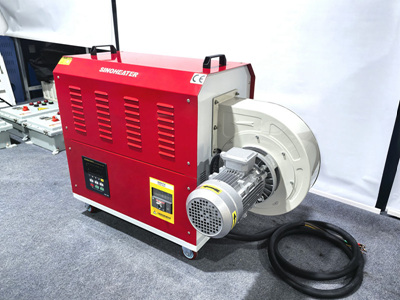
High-Pressure Hot Air Blowers: Achieving Powerful Airflow for Long-Distance Ventilation
When industrial or commercial spaces require rapid heating and efficient air circulation over large areas, high-pressure hot air blowers emerge as a critical solution. These devices combine intense heat generation with strong airflow pressure, enabling them to deliver warm air across significant distances without losing effectiveness. This guide explores the mechanics, benefits, and applications of high-pressure hot air blowers designed for long-range ventilation.
Understanding the Mechanics of High-Pressure Air Delivery
High-Powered Fan Design
The core of a high-pressure hot air blower lies in its fan system, engineered to generate substantial airflow pressure. Unlike standard fans, which prioritize volume over force, high-pressure models use specialized impellers with curved blades or axial designs to compress air efficiently. These impellers rotate at high speeds, creating a concentrated stream of air capable of overcoming resistance from ductwork, filters, or environmental factors like wind. The result is a focused jet of air that maintains velocity even when channeled through long pipes or vents.
Durable Housing and Airflow Optimization
To support high-pressure operation, the blower’s housing must withstand intense internal forces without leaking or vibrating excessively. Manufacturers construct these units from reinforced materials like steel or heavy-duty plastics, ensuring structural integrity under prolonged stress. Additionally, the internal layout of the blower is optimized to minimize turbulence. Smooth, tapered ducts guide air from the fan to the outlet, reducing energy loss and maintaining pressure. Some models incorporate adjustable vanes or dampers to fine-tune airflow direction and intensity based on specific needs.
Advantages of High-Pressure Systems for Far-Reaching Ventilation
Overcoming Distance-Related Challenges
Traditional heating systems struggle to distribute warm air evenly across large spaces, especially when the heat source is far from the target area. High-pressure hot air blowers address this by generating enough force to push air through extended duct networks or open environments. For example, in warehouses with high ceilings, these blowers can project warm air downward to counteract stratification, where heat rises and leaves the floor level cold. Similarly, in outdoor venues or construction sites, high-pressure airflow ensures workers remain comfortable even at considerable distances from the blower.
Maintaining Temperature Consistency
Uniform heating is essential in processes like drying, curing, or temperature-sensitive manufacturing. High-pressure blowers excel here by delivering a steady stream of heated air that prevents hot spots or cold zones. The concentrated airflow penetrates materials or products more effectively than diffuse heating methods, accelerating drying times or ensuring even curing of coatings. This precision reduces waste and improves product quality, making high-pressure systems valuable in industries such as automotive painting, food processing, or textile production.
Energy Efficiency Through Targeted Delivery
By focusing airflow on specific areas, high-pressure blowers minimize energy waste compared to systems that heat entire spaces indiscriminately. For instance, in a large factory, only certain zones may require heating during off-peak hours. A high-pressure blower can direct warm air precisely to those areas, avoiding the need to run central heating systems at full capacity. Additionally, the reduced duct length required for effective airflow (due to higher pressure) lowers heat loss through pipes, further enhancing efficiency.
Practical Applications of High-Pressure Hot Air Blowers
Industrial Drying and Curing Processes
In manufacturing, drying is a time-sensitive step that impacts production speed and quality. High-pressure hot air blowers accelerate this process by delivering intense, directed heat to wet surfaces or materials. For example, in the printing industry, these blowers quickly dry ink on paper or fabric, preventing smudging and enabling faster throughput. Similarly, in the automotive sector, high-pressure airflow cures paint or coatings on vehicle parts, ensuring a durable finish without prolonged waiting times.
Large-Scale Space Heating Solutions
Facilities like aircraft hangars, sports arenas, or agricultural greenhouses demand efficient heating across vast areas. High-pressure blowers meet this challenge by projecting warm air over long distances, eliminating the need for multiple heating units. In greenhouses, for instance, these blowers distribute heat evenly among plants, preventing uneven growth caused by localized cold spots. The ability to adjust airflow direction also allows farmers to target specific crop sections during colder seasons, optimizing energy use.
Emergency Ventilation and Fume Control
In environments where hazardous fumes or dust accumulate, rapid ventilation is crucial for worker safety. High-pressure hot air blowers can quickly dilute or expel contaminated air, especially in confined spaces like tunnels, mines, or underground parking garages. By generating strong airflow, they create negative pressure zones that draw fumes toward extraction points, reducing exposure risks. Some models also incorporate heating elements to prevent condensation in cold environments, which could otherwise lead to equipment corrosion or slippery surfaces.
High-pressure hot air blowers represent a versatile tool for industries and spaces requiring powerful, long-distance airflow. Their ability to combine heat generation with targeted delivery makes them indispensable for applications ranging from industrial processing to large-scale heating, ensuring efficiency, safety, and consistency in challenging environments.


