
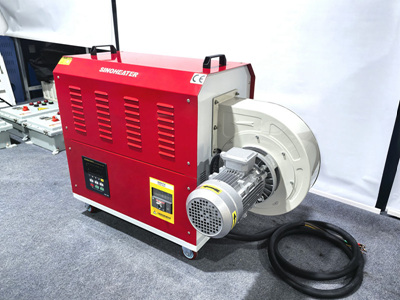
Precision Temperature Control in Constant-Temperature Hot Air Blowers: A Technical Overview
Maintaining a stable and accurate temperature output is essential for hot air blowers used in industrial processes, climate control, or specialized applications like drying or curing. Unlike basic heating systems, constant-temperature models rely on advanced control mechanisms to minimize fluctuations and ensure consistent performance. Below, we explore the technologies behind precise temperature regulation, their benefits, and practical considerations for users.
Core Components for Stable Temperature Output
Achieving precise temperature control requires a combination of sensors, controllers, and heating elements working in harmony. Each component plays a critical role in maintaining the desired heat level without overshooting or undershooting.
High-Sensitivity Temperature Sensors
The foundation of any precise control system is accurate temperature measurement. Modern hot air blowers use thermistors or resistance temperature detectors (RTDs) to monitor air temperature in real time. These sensors offer rapid response times and high resolution, detecting changes as small as 0.1°C. Placement is key—sensors are typically positioned near the heating element and at the air outlet to capture both the heating process and final output temperature.
PID Control Algorithms
Proportional-Integral-Derivative (PID) controllers are the brains behind stable temperature regulation. Unlike simple on/off switches, PID controllers adjust heating power continuously based on the difference between the setpoint and the measured temperature. The proportional term reacts to current errors, the integral term corrects accumulated deviations, and the derivative term predicts future trends to prevent overshooting. This dynamic adjustment ensures the system reaches and maintains the target temperature quickly and accurately.
Variable-Power Heating Elements
Fixed-wattage heating elements struggle to maintain precise temperatures because they can only be fully on or off. Variable-power alternatives, such as silicon-controlled rectifiers (SCRs) or phase-angle controllers, allow for fine-grained adjustments to heating output. By modulating the voltage or current supplied to the element, these systems can deliver anywhere from 0% to 100% of their rated power, enabling smooth transitions between temperature setpoints.
Benefits of Precision Temperature Control
Stable temperature output offers numerous advantages across industries, from improving product quality to reducing energy waste.
Enhanced Process Consistency
In applications like coating drying or material curing, even minor temperature variations can lead to defects or inconsistent results. Precision control ensures every batch or component receives the same heat treatment, reducing scrap rates and improving overall yield. For example, in electronics manufacturing, maintaining a ±1°C window during solder reflow prevents voids or cold joints in circuit boards.
Energy Efficiency Gains
Frequent cycling between on and off states wastes energy and stresses components. A precisely controlled system operates at the minimum power required to maintain the setpoint, cutting electricity consumption by up to 20% compared to basic models. This is particularly valuable in 24/7 operations like greenhouse heating, where even small efficiency improvements translate to significant cost savings over time.
Extended Equipment Lifespan
Thermal stress from rapid temperature changes accelerates wear on heating elements, fans, and sensors. By minimizing fluctuations, precision control reduces mechanical fatigue and extends the service life of critical components. This lowers maintenance costs and minimizes unplanned downtime, which is crucial in industries like automotive painting or food processing.
Practical Considerations for Implementation
While the benefits are clear, achieving precise temperature control requires careful planning and calibration.
Proper Sensor Calibration
Even the most advanced sensors can drift over time, leading to inaccurate readings. Regular calibration against a certified reference thermometer ensures measurements remain reliable. For critical applications, some systems incorporate self-calibrating sensors that adjust automatically based on ambient conditions or known reference points.
Airflow Management
Temperature stability isn’t just about heating—it also depends on consistent airflow. Variations in fan speed or duct design can create hot or cold spots, undermining control efforts. Using variable-speed fans or diffusers to maintain uniform air distribution helps the system respond predictably to temperature changes.
Environmental Factors
External conditions like ambient temperature, humidity, or air pressure can influence heating performance. For example, cold inlet air requires more energy to reach the setpoint, while high humidity might slow drying processes. Advanced controllers can account for these variables by adjusting setpoints dynamically or integrating additional sensors to monitor environmental factors.
Advanced Features for Fine-Tuning
Modern hot air blowers offer optional features to further refine temperature control and adapt to specific needs.
Remote Monitoring and Alerts
IoT-enabled systems allow users to track temperature trends in real time via web dashboards or mobile apps. Alerts can notify operators if the temperature drifts outside acceptable ranges, enabling quick intervention before product quality is affected. This is particularly useful in unattended operations or facilities with multiple heating zones.
Multi-Zone Control
In large spaces or complex processes, different areas may require distinct temperature settings. Multi-zone controllers divide the system into independent sections, each with its own sensor and PID loop. This ensures precise heating where needed without overheating adjacent zones, reducing energy use and improving flexibility.
Fail-Safe Mechanisms
Safety is paramount in high-temperature applications. Fail-safe features like over-temperature shutdown, automatic reset, or redundant sensors prevent runaway heating if a component fails. Some systems also include manual override modes for maintenance or emergency operation.
Precision temperature control in hot air blowers is no longer a luxury—it’s a necessity for industries demanding consistency, efficiency, and reliability. By combining advanced sensors, intelligent controllers, and variable-power heating, these systems deliver stable heat output even in challenging conditions. Whether optimizing a manufacturing process or maintaining a controlled environment, the right control strategy ensures optimal performance with minimal waste.


