
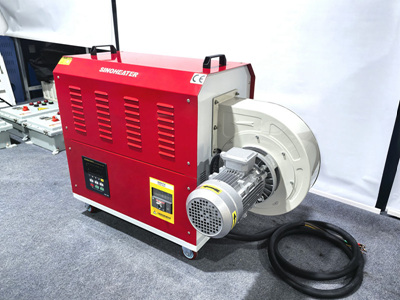
Maximizing Coverage with Wide-Angle Airflow in Hot Air Blowers
When heating large, open spaces like workshops, retail floors, or event venues, ensuring uniform temperature distribution across every corner is essential for comfort and efficiency. Hot air blowers designed with wide-angle airflow systems excel in this regard by dispersing heated air over broader areas compared to traditional directional models. This approach minimizes cold spots, reduces the need for multiple units, and creates a more consistent thermal environment.
How Wide-Angle Airflow Enhances Coverage
Wide-angle airflow systems utilize specially engineered nozzles or diffusers to spread heated air in a sweeping, fan-like pattern. Unlike narrow-angle designs that focus heat on specific zones, these systems project warmth across a 120-degree to 180-degree arc, depending on the configuration. This expansive dispersion ensures that air reaches walls, corners, and other hard-to-heat areas without requiring additional equipment.
The science behind this lies in the nozzle’s geometry. Wide-angle nozzles feature flared openings that slow down air velocity while increasing the spread. This trade-off between speed and coverage prevents localized overheating while maintaining sufficient warmth at greater distances. For example, a blower positioned near the center of a warehouse can evenly heat surrounding shelving units and workstations without leaving gaps in coverage.
Applications in Open-Plan Spaces
Open-plan environments like showrooms or community centers benefit significantly from wide-angle airflow. These areas often lack partitions to trap heat, leading to uneven temperature distribution as warm air rises and cold air settles. A single wide-angle blower can counteract this by creating a horizontal layer of heated air that circulates throughout the space.
Consider a large automotive repair shop with multiple bays. By installing wide-angle blowers along the ceiling, operators can ensure that every workstation receives consistent warmth, even when doors are frequently opened for vehicle access. The broad airflow pattern also reduces the likelihood of drafts, which can disrupt workflows and create discomfort for technicians.
Improving Air Circulation in High-Traffic Areas
High-traffic zones such as airport terminals or shopping malls face unique heating challenges due to constant foot traffic and open entryways. Wide-angle blowers address these by generating gentle, widespread airflow that prevents cold air from infiltrating occupied areas. This is particularly effective near entrances, where a curtain of warm air can act as a barrier against outdoor temperatures.
In a retail setting, wide-angle blowers placed above aisles can maintain comfortable shopping conditions without directing heat directly onto customers. The subtle, omnidirectional airflow ensures that warmth is felt throughout the store, encouraging longer visits and reducing energy waste caused by overheating specific sections.
Overcoming Limitations of Wide-Angle Systems
While wide-angle airflow offers superior coverage, it’s not without challenges. One common issue is reduced throw distance compared to narrow-angle models. Because the air spreads out quickly, it may lose intensity before reaching distant areas, especially in tall spaces like atriums or gymnasiums. To compensate, engineers often recommend positioning blowers at lower heights or using multiple units in staggered formations.
Another consideration is airflow interference from obstacles like machinery or display fixtures. In cluttered environments, wide-angle airflow can be disrupted, creating uneven heating patterns. Strategic placement of blowers—such as mounting them on walls or columns—can help mitigate this by directing airflow around obstacles.
Noise is another potential drawback, as the increased air volume required for wide coverage may generate more sound. Modern designs incorporate aerodynamic fan blades and vibration-dampening materials to minimize operational noise without sacrificing performance.
Innovations Driving the Future of Wide-Angle Heating
Advancements in airflow control technology are pushing the boundaries of what wide-angle systems can achieve. Variable-angle nozzles, for instance, allow users to adjust the dispersion pattern based on seasonal demands or occupancy changes. During winter, a wider angle ensures maximum coverage, while a narrower setting in milder weather reduces energy use.
Smart sensors are also transforming wide-angle blowers into adaptive heating solutions. These systems monitor temperature gradients in real time and automatically adjust airflow direction and speed to eliminate cold spots. In a museum, for example, sensors might detect cooler temperatures near large windows and redirect warm air to those areas while maintaining stable conditions elsewhere.
Sustainability is another focus area, with manufacturers exploring eco-friendly materials and energy-efficient motors. Hybrid systems that combine wide-angle airflow with radiant heating panels are emerging as a way to provide both immediate and long-lasting warmth, reducing reliance on fossil fuels in commercial settings.
By embracing wide-angle airflow technology, facilities can achieve comprehensive heating coverage with fewer units and lower operational costs. Whether in industrial, retail, or public spaces, these systems offer a versatile solution to the age-old challenge of maintaining consistent temperatures in large areas. As innovation continues, the next generation of wide-angle blowers promises even greater precision, adaptability, and environmental responsibility.


