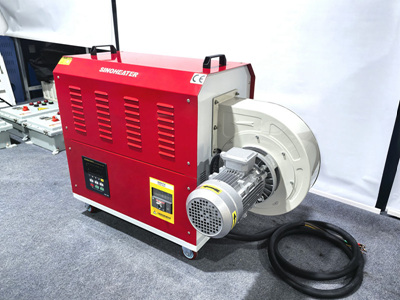
Achieving Ultra-Quiet Operation with Hot Air Blowers: Noise Levels Below [Common Decibel Threshold]
In environments where noise pollution disrupts productivity, comfort, or relaxation, selecting a hot air blower designed for silent operation becomes essential. Modern advancements in engineering and materials science have made it possible to reduce operational noise to levels barely perceptible to the human ear, often below 40 decibels—equivalent to a quiet library or whispering conversation. These quiet systems achieve this through innovative design choices, precision manufacturing, and intelligent control mechanisms that minimize vibrations, air turbulence, and mechanical friction.
Core Design Principles for Noise Reduction
The foundation of a quiet hot air blower lies in its structural integrity and component selection. Manufacturers prioritize materials that dampen vibrations, such as rubberized mounts for motors and insulated casings to prevent sound transmission. For example, a motor housed in a foam-lined enclosure will produce less noise than one mounted directly to a rigid frame, as the foam absorbs vibrations before they can radiate as sound.
Another critical factor is the alignment of moving parts. Misaligned fan blades or heating elements can create friction and turbulence, leading to rattling or humming noises. Precision engineering ensures all components fit seamlessly, reducing unnecessary movement and eliminating potential noise sources.
Optimized Airflow Management
Airflow design plays a pivotal role in noise reduction. Traditional blowers often generate loud whooshing sounds as air rushes through narrow ducts or past sharp edges. Quiet models incorporate aerodynamic housings with smooth, curved surfaces that guide airflow efficiently, minimizing turbulence and pressure fluctuations.
Variable-speed fans further enhance this by adjusting airflow based on heating demands. Instead of running at full speed constantly, these fans operate at lower RPMs when less heat is needed, reducing both air velocity and associated noise. Some systems even use centrifugal fans, which produce less noise than axial models by moving air in a circular motion rather than a straight line.
Advanced Motor Technologies
The motor is often the loudest component in a hot air blower. To address this, engineers have developed brushless DC (BLDC) motors, which eliminate the friction and electrical noise generated by traditional brushed motors. BLDC motors also offer precise speed control, allowing for smoother acceleration and deceleration that reduces sudden noise spikes.
Additionally, some motors incorporate soft-start features that gradually ramp up power, preventing the loud “clunk” often heard when a blower activates. This not only reduces startup noise but also extends the motor’s lifespan by minimizing wear and tear.
Practical Strategies to Minimize Operational Noise
Even with a well-designed blower, installation and usage practices can influence noise levels. Proper placement is key: mounting the unit on a stable, level surface prevents vibrations from amplifying through floors or walls. In residential settings, placing the blower away from bedrooms or living areas ensures noise remains unobtrusive.
Regular Maintenance for Silent Performance
Dust accumulation on fan blades or heating elements can disrupt airflow and create imbalance, leading to increased noise. Cleaning filters and inspecting components monthly ensures optimal performance. Lubricating moving parts, such as bearings or hinges, also reduces friction-related sounds.
For systems with ductwork, ensuring joints are sealed tightly prevents air leaks, which can cause whistling or hissing noises. Insulating ducts with sound-dampening materials further muffles any remaining noise as air travels through the system.
Utilizing Noise-Canceling Features
Some modern blowers integrate active noise-canceling technology, which uses microphones to detect ambient sounds and generates inverse sound waves to cancel them out. While more common in audio equipment, this approach is being adapted for heating systems to neutralize low-frequency hums or vibrations.
Passive noise reduction methods, such as enclosing the blower in a soundproof cabinet or using acoustic panels around the installation area, can also be effective. These solutions are particularly useful in commercial settings like offices or hospitals, where maintaining a quiet environment is critical.
Overcoming Challenges in Low-Noise Design
Despite their benefits, quiet hot air blowers face certain challenges. One is the trade-off between noise reduction and heating performance. Some designs may prioritize silence over airflow volume, potentially requiring longer operation times to achieve desired temperatures. However, advancements in heating element efficiency and airflow optimization have largely mitigated this issue, allowing quiet blowers to match the performance of louder models.
Another challenge is cost. Noise-reducing materials and technologies, such as BLDC motors or soundproof enclosures, can increase production expenses. However, the long-term benefits of reduced stress, improved focus, and enhanced comfort often outweigh the initial investment, especially in noise-sensitive environments.
Finally, user expectations play a role. Some may perceive a completely silent blower as non-functional, prompting manufacturers to include subtle indicator lights or low-volume startup tones to confirm operation without adding disruptive noise.
The Future of Silent Heating Solutions
As demand for quiet appliances grows, the development of hot air blowers with near-silent operation will continue to evolve. Innovations like magnetic levitation fans, which eliminate physical contact between moving parts, promise to reduce noise to almost imperceptible levels. These fans use magnetic fields to suspend components, removing friction entirely and enabling whisper-quiet performance.
AI-driven diagnostics are another emerging trend. By analyzing operational data, these systems can detect and correct minor imbalances or inefficiencies that contribute to noise before they escalate. This proactive approach ensures consistent quiet performance over the blower’s lifespan.
By prioritizing noise reduction through thoughtful design, advanced materials, and smart technology, hot air blowers can deliver warmth without disruption. Whether in a home, office, or healthcare facility, these silent systems offer a solution to the age-old problem of balancing heating efficiency with acoustic comfort. As innovation progresses, the dream of a perfectly quiet yet powerful heating system is closer to reality than ever before.