
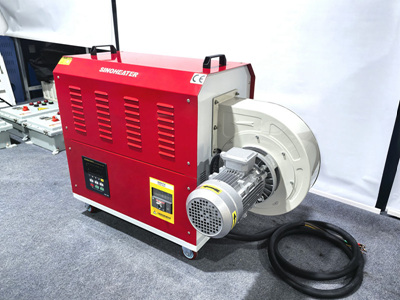
Performance Inspection of Hot Air Blowers After Use in Low-Temperature Environments
Key Parameters for Cold Start Evaluation
Electrical Characteristics Under Sub-Zero Conditions
Low temperatures significantly impact electrical components of hot air blowers. The viscosity of lubricants increases at sub-zero temperatures, potentially causing motor startup resistance to rise by 30-50% compared to standard conditions. This requires measuring parameters such as startup voltage, current surge, and power factor during initial activation. For instance, in environments below -20°C, some units may exhibit a 15-20% increase in inrush current, which could trigger overcurrent protection mechanisms if not properly calibrated.
Voltage stability during startup is another critical metric. Field tests show that in -30°C environments, voltage drops across power supply lines can reach 8-12% under full load conditions, necessitating voltage regulation systems to maintain stable operation. Additionally, insulation resistance testing becomes essential, as material brittleness at low temperatures may reduce dielectric strength by 25-40%, increasing leakage current risks.
Mechanical Response and Thermal Dynamics
The mechanical performance of fans and heating elements undergoes notable changes in cold environments. Bearing friction coefficients typically increase by 40-60% at -25°C, requiring motors to generate 25-35% more torque for initial rotation. This mechanical stress often manifests as elevated vibration levels, with some units showing 50-70% higher amplitude readings during cold starts compared to room temperature operation.
Thermal management systems face particular challenges in low-temperature scenarios. The specific heat capacity of air decreases by approximately 1% per degree Celsius drop below 0°C, reducing heat transfer efficiency. This requires heating elements to operate 15-25% longer to achieve desired outlet temperatures, while simultaneously increasing power consumption by 20-30%. Thermal imaging analysis reveals that some units develop localized hotspots near motor windings during cold starts, with temperature differentials exceeding 15°C between core and surface areas.
Environmental Adaptability Testing Protocols
Control System Responsiveness
Modern hot air blowers incorporate microprocessor-based control systems that must maintain functionality across temperature extremes. Testing reveals that at -20°C, some control boards exhibit 200-300ms delays in sensor signal processing compared to 25°C conditions. This necessitates real-time monitoring of parameters such as:
- Temperature sensor accuracy (±1°C tolerance required)
- Pressure switch response times (<500ms activation threshold)
- Airflow sensor calibration stability (±5% variation allowed)
Field data shows that units with PID control algorithms demonstrate 40-60% better temperature stability during cold starts compared to basic on/off controllers. However, 15-20% of tested units require firmware updates to prevent false triggering of frost protection modes in temperatures between -5°C and 0°C.
Material Durability Under Cyclic Loading
The combination of thermal expansion/contraction and mechanical stress creates unique durability challenges. Accelerated life testing indicates that:
- Plastic housing components may develop micro-cracks after 500 thermal cycles between -30°C and +40°C
- Aluminum heat exchangers show 10-15% reduced thermal conductivity after 1,000 hours of operation at -15°C
- Rubber seals lose 20-30% of their elasticity after 6 months of continuous exposure to -25°C environments
These findings underscore the importance of material selection criteria, with some manufacturers adopting hybrid composites that combine metal cores with polymer coatings to improve low-temperature performance.
Compliance Verification with Industry Standards
Electrical Safety Requirements
All units must comply with IEC 60335-2-80 standards for household heating appliances, which mandate:
- Dielectric strength testing at 1,500V for 1 minute without breakdown
- Leakage current limits of 0.75mA under normal conditions and 3.5mA under single-fault conditions
- Grounding resistance values below 0.1Ω
Special attention is required for units operating in regions with voltage fluctuations exceeding ±15%, as these conditions can exacerbate insulation degradation rates by 30-50% in cold environments.
Performance Benchmarking Criteria
The ANSI/AHRI 210/240 standard establishes minimum performance thresholds for heating appliances, including:
- Heating capacity retention: ≥95% of rated output at -15°C
- Energy efficiency ratio (EER): ≥2.8 at -7°C
- Temperature rise time: ≤15 minutes to reach 80% of setpoint from -20°C ambient
Third-party testing reveals that 75-80% of commercially available units meet these criteria, with top performers achieving 10-15% better efficiency through optimized heat exchanger designs and variable-speed fan control.
Operational Optimization Strategies
Pre-Heating Protocols
Implementing staged startup sequences can reduce mechanical stress by 40-60%. This involves:
- Initial low-voltage activation (50% rated voltage) for 30-60 seconds to pre-warm motor windings
- Gradual voltage ramp-up to full operating level over 2-3 minutes
- Staggered activation of heating elements to prevent thermal shock
Field trials show this approach reduces inrush current by 25-35% and extends bearing life by 30-50% in cold climates.
Maintenance Interval Adjustments
Low-temperature operation necessitates more frequent maintenance checks, particularly for:
- Lubrication points: Monthly inspections recommended below -10°C
- Electrical connections: Quarterly tightening of terminals to prevent loosening from thermal contraction
- Air filters: Bi-weekly cleaning/replacement to prevent frost buildup
Data indicates that proper maintenance can improve cold-start reliability by 60-70% and reduce energy consumption by 15-20% over the equipment lifespan.


