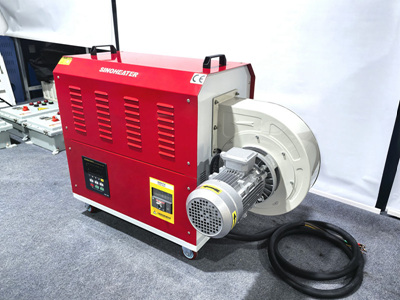
Shielding Measures for Hot Air Blowers in Signal Interference Environments
Hot air blowers operating in areas with high levels of signal interference—such as near industrial control systems, wireless communication networks, or high-power electrical equipment—can experience disrupted performance, including erratic motor behavior, unstable temperature control, or communication failures. Signal interference, whether electromagnetic (EMI) or radio frequency (RFI), can penetrate unprotected devices, causing malfunctions that compromise safety and efficiency. Below are detailed strategies to shield hot air blowers from signal interference and ensure reliable operation.
Identifying Sources and Types of Signal Interference
Signal interference affecting hot air blowers typically originates from two primary sources: nearby electronic devices emitting electromagnetic fields or radio waves, and environmental factors like power lines or metal structures that amplify or reflect signals. Common culprits include mobile phone towers, Wi-Fi routers, microwave ovens, variable frequency drives (VFDs), and arc welders. These devices generate frequencies that overlap with the blower’s internal circuits, leading to noise, voltage spikes, or data corruption.
To pinpoint interference sources, conduct a site survey using a spectrum analyzer or EMI detector. These tools measure signal strength across frequencies, helping identify peaks that coincide with the blower’s malfunction patterns. For example, if errors occur when a nearby radio transmitter operates, RFI is likely the cause. Similarly, flickering displays or motor vibrations near industrial machinery suggest EMI from power electronics. Documenting these correlations guides targeted shielding efforts.
Environmental factors also influence interference severity. Metal enclosures, concrete walls, or large appliances can create resonant cavities that trap and amplify signals, turning minor noise into critical disruptions. Dust or moisture accumulation on the blower’s housing may alter its electrical properties, making it more susceptible to interference. Assessing these variables helps prioritize shielding measures for maximum impact.
Implementing Physical Shielding Techniques
Physical shielding is a first-line defense against signal interference, creating barriers that block or redirect incoming waves. Start by enclosing the blower’s control panel and motor housing in conductive materials like aluminum or copper sheets. These metals reflect electromagnetic waves, preventing them from penetrating sensitive components. Ensure all seams are tightly sealed with conductive tape or gaskets to eliminate gaps where signals could leak through.
For added protection, line the interior of enclosures with RF-absorbing materials, such as ferrite-loaded foam or carbon-impregnated rubber. These substances convert electromagnetic energy into heat, dissipating interference before it reaches circuits. Apply the absorber to walls, floors, and lids, focusing on areas closest to potential noise sources. Avoid covering ventilation openings, as this could trap heat and damage the device.
Grounding the shielding structure is critical to divert intercepted signals safely to earth. Connect the conductive enclosure to a grounding rod or existing grounding system using heavy-duty copper wire. Ensure the connection is low-resistance and free of corrosion, as poor grounding can turn the shield into an antenna that amplifies interference. Regularly inspect grounding points for tightness and integrity to maintain effectiveness.
In cases where shielding the entire blower is impractical, focus on protecting vulnerable components. Wrap individual circuit boards or sensors in mu-metal foil, a nickel-iron alloy with high magnetic permeability that channels magnetic fields away from electronics. Use shielded cables for power and data lines, ensuring connectors are properly terminated to prevent signal leakage. Route cables away from interference sources and avoid bundling them with unshielded wires.
Enhancing Electrical Circuit Protection
Beyond physical barriers, electrical circuit modifications can strengthen the blower’s resilience to signal interference. Install EMI filters on power inputs to block high-frequency noise from entering the device. These filters typically consist of inductors and capacitors arranged to attenuate frequencies above a specified threshold, such as 1 MHz, while allowing the 50/60 Hz mains power to pass unimpeded. Choose filters rated for the blower’s voltage and current requirements to avoid overloading.
For communication lines, such as those used for remote control or monitoring, use optoisolators or fiber-optic cables to isolate the blower’s circuits from external networks. Optoisolators transfer signals via light, breaking electrical connections that could conduct interference, while fiber optics are inherently immune to EMI/RFI due to their non-conductive nature. These solutions are particularly useful in industrial settings where wired Ethernet or serial connections are prone to noise pickup.
Surge protectors and transient voltage suppressors (TVSs) can safeguard the blower from voltage spikes caused by nearby lightning strikes or switching operations. Place these devices at the power entry point and on sensitive subcircuits, such as motor drivers or microcontroller inputs. TVSs clamp excessive voltages to safe levels, preventing damage to components like diodes or transistors that might otherwise fail under stress.
Finally, optimize the blower’s grounding layout to minimize ground loops, which occur when multiple ground paths create circulating currents that induce noise. Ensure all grounding points converge at a single, low-impedance connection to the main grounding system. Avoid daisy-chaining grounds between devices, as this can create loops. Instead, use a star configuration with separate wires radiating from a central ground point.
Adopting Operational Strategies to Reduce Interference Exposure
Operational adjustments can complement shielding and circuit protections by minimizing the blower’s exposure to interference sources. Schedule maintenance or high-interference tasks, such as arc welding or motor testing, during periods when the blower is not in use. If simultaneous operation is unavoidable, increase the physical distance between the blower and interference sources, as signal strength diminishes rapidly with distance.
Reorient the blower to reduce line-of-sight exposure to transmitters or antennas. Even small angular changes can significantly lower interference levels due to the directional nature of many signal emissions. For example, positioning the blower’s control panel perpendicular to a nearby radio tower may cut noise by half compared to a parallel alignment.
In environments with fluctuating interference, implement software-based monitoring to detect and respond to anomalies in real time. Use sensors to track motor current, temperature, or vibration patterns, and program the blower’s controller to adjust settings automatically when interference is detected. For instance, the system could reduce speed or switch to a backup communication channel if signal quality drops below a threshold.
Train personnel on interference-aware practices, such as avoiding the use of mobile phones or two-way radios near the blower during critical operations. Encourage reporting of interference-related issues immediately to facilitate quick troubleshooting. By combining proactive shielding, circuit hardening, and operational discipline, users can ensure hot air blowers operate reliably in even the most challenging signal-rich environments.