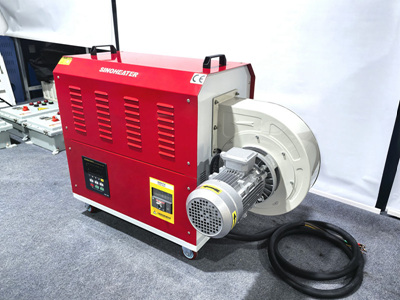
Single-Zone Hot Air Blowers: Streamlined Heating for Uniform Temperature Control
For applications requiring consistent heating across a single area, single-zone hot air blowers provide a straightforward and efficient solution. Unlike multi-zone systems that divide spaces into separate temperature zones, these units focus on delivering uniform heat distribution, making them ideal for processes where uniformity is critical. Below, we explore the mechanics of single-zone heating, its applications across industries, and key considerations for optimizing performance.
How Single-Zone Heating Works
Single-zone hot air blowers operate on a simple principle: a centralized heating system generates and circulates warm air evenly throughout a designated space. This uniformity is achieved through carefully engineered components and control mechanisms.
Centralized Heating Element and Fan Assembly
At the heart of a single-zone blower is a single heating chamber housing a resistive heating element or gas burner. When activated, the element warms the air passing through it. A high-velocity fan then draws in ambient air, forces it over the heating element, and expels the heated air through a single outlet or ductwork. The design ensures that every cubic foot of air reaching the target area has been heated to the same temperature, eliminating cold spots.
Precision Temperature Control
A single thermistor or RTD (Resistance Temperature Detector) monitors the air temperature near the outlet, feeding data to a PID (Proportional-Integral-Derivative) controller. The controller adjusts the heating element’s power output in real time to maintain the set temperature. For example, if the air cools due to drafts or opening a door, the controller increases power to compensate, ensuring consistent heat delivery. Some systems also include manual overrides for fine-tuning during setup or process adjustments.
Ductwork and Airflow Optimization
To maximize uniformity, single-zone blowers often incorporate strategically designed ducts or diffusers. These components distribute heated air evenly across the space, preventing stratification (where hot air rises and cold air settles). Adjustable louvers or variable-speed fans further refine airflow direction and velocity, allowing operators to adapt to changes in room layout or heating demands.
Applications Where Single-Zone Heating Excels
The simplicity and reliability of single-zone hot air blowers make them indispensable in processes requiring consistent thermal conditions. Here are three key sectors leveraging this technology.
Warehouse and Workshop Heating
Large open spaces like warehouses or automotive repair shops demand cost-effective heating solutions that cover vast areas uniformly. Single-zone blowers can warm entire floors by circulating heated air through overhead ducts or floor-mounted diffusers. This approach eliminates the need for multiple heating units, reducing installation and maintenance costs. For example, a warehouse storing temperature-sensitive inventory might use a single-zone blower to maintain a steady 60°F, preventing condensation or material degradation.
Agricultural Drying and Curing
In farming operations, crops like grains, herbs, or tobacco require uniform drying to avoid mold growth or uneven moisture content. Single-zone blowers direct heated air evenly through drying chambers or barns, ensuring every batch receives the same treatment. The consistent airflow also accelerates drying times, improving throughput and reducing energy costs compared to natural drying methods.
Industrial Preheating and Defrosting
Manufacturing processes often require preheating materials or equipment to specific temperatures before processing. Single-zone blowers can uniformly warm metal sheets, plastics, or composites to prevent thermal shock during stamping, molding, or welding. Similarly, in cold climates, these units defrost large surfaces like conveyor belts or loading docks by circulating warm air evenly, minimizing downtime caused by ice buildup.
Key Considerations for Effective Single-Zone Heating
To ensure optimal performance, users should address several operational and design factors when deploying single-zone hot air blowers.
Proper Sizing for Space Requirements
Oversized blowers waste energy by overheating the space, while undersized units struggle to maintain setpoints. Calculating the cubic footage of the area and its heat loss rate (through walls, windows, or doors) helps determine the appropriate blower capacity. For example, a poorly insulated warehouse may require a higher-capacity unit than a well-insulated workshop of the same size.
Airflow Distribution Strategy
Even with a single zone, uneven airflow can create hot or cold spots. Positioning the blower centrally and using directional diffusers or ductwork with evenly spaced outlets ensures balanced heat distribution. In tall spaces, recirculation fans may be needed to mix heated air from the ceiling with cooler air near the floor, maintaining vertical temperature uniformity.
Maintenance and Filter Replacement
Dust or debris buildup on heating elements or fans reduces efficiency and can cause overheating. Regular cleaning of the intake vents, heating chamber, and fan blades ensures optimal airflow and heat transfer. Replacing air filters every 3–6 months (or as needed) prevents clogging, which would otherwise force the blower to work harder and consume more energy.
Advanced Features for Enhanced Performance
Modern single-zone hot air blowers incorporate optional technologies to improve reliability, energy efficiency, and user control.
Energy-Saving Modes
Some units offer “eco” or “standby” modes that reduce heating output during off-peak hours or when the space is unoccupied. For example, a warehouse might lower the temperature from 60°F to 50°F overnight, then resume full heating before workers arrive. This approach cuts energy costs without sacrificing comfort or process integrity.
Remote Monitoring and Control
IoT-enabled blowers allow operators to monitor temperature trends, adjust setpoints, or receive alerts via smartphone apps or web dashboards. This is particularly useful for facilities with multiple heating zones or off-site management needs. For instance, a farm manager could check drying chamber temperatures remotely and adjust the blower settings to avoid over-drying a crop.
Fail-Safe Mechanisms
Safety features like over-temperature shutdown protect against equipment damage or fire hazards. If the air temperature exceeds a predefined limit (e.g., 200°F), the blower automatically cuts power to the heating element and triggers an alarm. Some systems also include manual reset buttons or redundant sensors to ensure operations can resume safely after a fault.
Single-zone hot air blowers offer a reliable, cost-effective solution for applications demanding uniform heating across a single area. By combining centralized heating, precision control, and optimized airflow distribution, these units eliminate the complexity of multi-zone systems while delivering consistent thermal conditions. Whether warming a warehouse, drying crops, or preheating industrial materials, their simplicity and efficiency make them a cornerstone of modern heating infrastructure.