
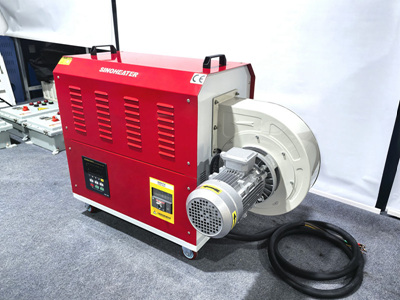
Temperature Regulation of Heating Components in Hot Air Machines for Electronic Product Assembly and Debugging
Precision Control During Circuit Board Drying Processes
Electronic circuit boards require strict humidity management during manufacturing. After cleaning processes, residual moisture on PCB surfaces can lead to electrical short circuits or solder joint defects. Industrial hot air machines address this by delivering uniform heat distribution through precision-engineered airflow systems. The temperature regulation mechanism involves PID controllers that continuously monitor outlet air temperature via embedded thermocouples, adjusting heating element output within ±1°C accuracy.
For delicate components like BGA chips, operators implement staged heating protocols. Initial low-temperature cycles (60-80°C) remove surface moisture without thermal shock, followed by medium-temperature phases (100-120°C) for deeper drying. Final high-temperature stages (130-150°C) ensure complete moisture evaporation while maintaining component integrity. This multi-stage approach prevents micro-cracking in ceramic substrates and maintains solder paste consistency during reflow processes.
Thermal Management in Component Aging Tests
Accelerated aging tests simulate long-term operational conditions by exposing components to elevated temperatures. Hot air machines create controlled thermal environments through modular heating chambers equipped with recirculating airflow systems. Temperature uniformity across the test chamber is maintained by strategically positioned air ducts and variable-speed blowers.
During semiconductor aging tests, components experience temperature cycling between -40°C and 150°C. The heating system incorporates dual-zone control – primary heating elements handle bulk temperature elevation while secondary micro-heaters correct localized temperature variations. Real-time temperature mapping software identifies hotspots, triggering automatic airflow redistribution to maintain ±2°C uniformity across the test area. This precision ensures reliable data collection for component lifespan predictions.
Optimized Heating for Solder Joint Formation
Reflow soldering processes demand precise thermal profiles to achieve reliable interconnections. Hot air rework stations employ infrared heating combined with forced convection for localized temperature control. The heating nozzle design features concentric air channels – inner channels deliver focused heat for solder melting while outer channels create protective air curtains preventing thermal damage to adjacent components.
For lead-free solder applications requiring higher melting points (217-227°C), operators adjust both temperature and airflow parameters. The heating system transitions through four thermal stages: preheat (100-150°C), soak (150-180°C), reflow (230-245°C), and cooling. Each stage maintains specific temperature rise rates (2-3°C/s) and dwell times to prevent void formation in solder joints. Advanced systems incorporate laser temperature sensors that provide real-time feedback, enabling dynamic adjustments to maintain optimal thermal profiles during continuous production.
Environmental Adaptation in Cleanroom Applications
Electronics manufacturing in cleanroom environments requires heating systems that meet stringent particulate control standards. Hot air machines designed for such settings incorporate HEPA filtration systems with 99.97% efficiency at 0.3μm particle size. The heating chambers feature smooth, crevice-free surfaces to minimize particle generation, while positive pressure ventilation prevents contamination ingress.
Temperature regulation in these systems integrates with cleanroom environmental controls. When ambient temperature fluctuations exceed ±2°C, the heating system automatically adjusts output to compensate while maintaining ISO Class 5 or better air quality. This synchronization ensures both thermal stability and particulate control during sensitive processes like optical component assembly or MEMS device manufacturing.


