
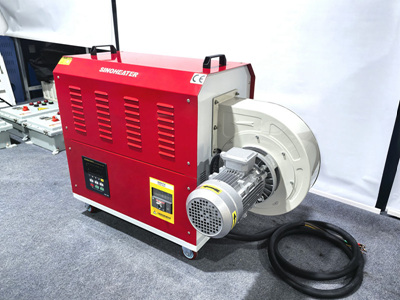
Understanding Insulation and Protection Grades for Hot Air Blowers
Hot air blowers, widely used in industrial heating, drying, and environmental control systems, rely on robust insulation and protection mechanisms to ensure safe and reliable operation. This article delves into the standards governing insulation grades and protection grades for these devices, providing insights into their design and application.
Insulation Grades: Ensuring Thermal Stability
Insulation grades in hot air blowers are critical for preventing electrical failures due to overheating. These grades are defined by the maximum temperature the insulation material can withstand without degrading. The International Electrotechnical Commission (IEC) has established a standardized classification system for insulation grades, which is widely adopted globally.
Common Insulation Grades and Their Applications
- A Grade (105°C): Suitable for low-power devices and environments with moderate temperatures, such as household appliances and small heating systems.
- B Grade (130°C): Commonly used in general-purpose motors, industrial equipment, and lighting systems where higher thermal stability is required.
- F Grade (155°C): Preferred for medium-sized motors, transformers, and generators, especially those operating in demanding environments like wind power generation and industrial heating.
- H Grade (180°C): Employed in high-power motors, generators, and large electrical equipment, including those used in aerospace and military applications where extreme temperatures are common.
The choice of insulation grade depends on the operating temperature, environmental conditions, and the power rating of the hot air blower. Selecting an appropriate grade ensures that the insulation material can withstand the expected thermal stresses, thereby extending the device’s service life.
Protection Grades: Safeguarding Against Environmental Factors
Protection grades, often referred to as IP (Ingress Protection) grades, define the level of protection a hot air blower offers against the ingress of solid objects and liquids. These grades are crucial for ensuring the device’s reliability in harsh environments, such as those with dust, moisture, or water splashes.
IP Grade Components and Their Significance
The IP grade is represented by two digits, each indicating a specific level of protection:
- First Digit (Solid Object Protection): Ranges from 0 (no protection) to 6 (complete protection against dust). For example, an IP5X rating means the device is protected against harmful dust accumulation, making it suitable for industrial settings with high dust levels.
- Second Digit (Liquid Ingress Protection): Ranges from 0 (no protection) to 8 (protection against continuous immersion in water). An IPX5 rating, for instance, indicates that the device can withstand water jets from any direction without suffering damage, making it ideal for outdoor applications or areas prone to water splashes.
Practical Applications of IP Grades in Hot Air Blowers
- IP54: Combines protection against harmful dust accumulation (IP5X) with resistance to water splashes from any direction (IPX4). This grade is suitable for general industrial use, where dust and moisture are common but not extreme.
- IP55: Offers enhanced protection against both dust (IP5X) and water jets (IPX5). This grade is ideal for applications in harsh environments, such as automotive manufacturing plants or food processing facilities, where water and cleaning agents are frequently used.
- IP65: Provides complete protection against dust (IP6X) and water jets (IPX5). This grade is essential for outdoor installations or areas with high levels of dust and moisture, ensuring the hot air blower operates reliably under challenging conditions.
Selecting the Right Grades for Your Application
Choosing the appropriate insulation and protection grades for a hot air blower involves considering several factors:
- Operating Temperature: Ensure the insulation grade can withstand the maximum temperature the device will encounter during operation.
- Environmental Conditions: Assess the level of dust, moisture, and water exposure to determine the required IP grade.
- Device Power Rating: Higher-power devices generate more heat, necessitating higher insulation grades to prevent thermal degradation.
- Safety Requirements: Compliance with industry-specific safety standards may dictate the minimum insulation and protection grades required.
By carefully evaluating these factors, you can select a hot air blower with the optimal insulation and protection grades, ensuring safe, reliable, and long-lasting performance in your specific application.


