
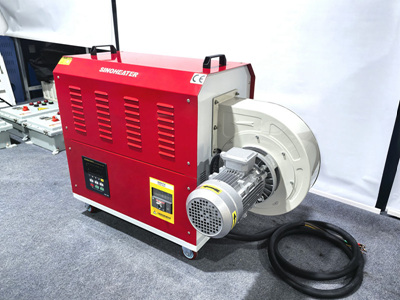
Precision Time Control for Wood Bending Using Hot Air Blowers
Wood bending requires precise heating to achieve structural integrity without compromising material properties. Hot air blowers offer a non-contact solution for softening wood fibers, enabling complex curves in furniture, musical instruments, and architectural components. This guide explores time-control strategies for steam bending, microwave-assisted bending, and chemical-softening processes, emphasizing material-specific adjustments and defect prevention.
Steam Bending: Time Optimization for Uniform Softening
Steam bending relies on controlled moisture and heat to plasticize wood fibers. The process involves exposing wood to saturated steam (100°C) for a duration that depends on wood thickness, species, and initial moisture content.
Key Time Parameters:
- Thin Sections (6–12mm): Steam for 20–30 minutes to ensure even penetration.
- Medium Sections (12–25mm): Extend steaming to 45–60 minutes.
- Thick Sections (25–50mm): Require 90–120 minutes to avoid internal stress gradients.
Species-Specific Adjustments:
- Softwoods (Pine, Spruce): Steam for 10–15% longer than hardwoods due to lower density.
- Hardwoods (Oak, Maple): Reduce steaming time by 10–15% if initial moisture content exceeds 15%.
Defect Prevention:
- Uneven Softening: Rotate wood every 10–15 minutes during steaming to ensure uniform heat distribution.
- Overheating: Monitor surface temperature with infrared sensors to prevent cellulose degradation.
- Moisture Loss: Wrap wood in plastic during transfer from steamer to mold to retain steam-induced plasticity.
Advanced Techniques:
- Intermittent Steaming: Apply steam in 5-minute bursts followed by 2-minute pauses to reduce surface checks.
- Pressure-Assisted Steaming: Use autoclaves to maintain 1–2 bar pressure, cutting steaming time by 20–30%.
Microwave-Assisted Bending: Rapid Heating for Time Efficiency
Microwave heating generates internal friction in wood molecules, enabling faster softening than steam. This method is ideal for thin sections (≤20mm) and species with high moisture content.
Time Control Protocols:
- Low-Power Setting (1–3kW): Heat 10mm-thick sections for 2–4 minutes, increasing to 6–8 minutes for 20mm sections.
- High-Power Setting (5–8kW): Reduce heating time by 50% but require stricter monitoring to avoid localized overheating.
Material-Specific Adjustments:
- High-Density Hardwoods (Ash, Hickory): Extend heating by 20–30% to ensure uniform softening.
- Low-Density Softwoods (Cedar, Fir): Decrease heating by 15–20% to prevent fiber separation.
Defect Prevention:
- Thermal Runaway: Use temperature-controlled microwaves with automatic shutoff at 110°C.
- Edge Burning: Shield wood edges with ceramic plates to distribute heat evenly.
- Moisture Imbalance: Pre-soak wood in water for 1–2 hours to ensure consistent dielectric properties.
Hybrid Techniques:
- Microwave + Steam Pre-Treatment: Steam wood for 10 minutes, then microwave for 1–2 minutes to reduce total processing time by 40%.
- Pulsed Microwave Heating: Alternate 30-second microwave bursts with 15-second pauses to minimize thermal stress.
Chemical-Softening Processes: Time Management for Controlled Plasticity
Chemical treatments alter wood’s cellular structure to enhance flexibility. Time control is critical to balance softening with dimensional stability.
Ammonia-Based Treatments:
- Liquid Ammonia: Immerse wood for 0.5–4 hours at -33°C to -78°C, depending on thickness.
- Gaseous Ammonia: Expose wood to 1–2 MPa pressure for 2–4 hours at 26°C.
Alkali Solutions:
- Sodium Hydroxide (10–15%): Soak wood for 6–12 hours, followed by rinsing and neutralization.
- Potassium Hydroxide (15–20%): Reduce soaking time to 4–8 hours for faster activation.
Urea and Ammonium Solutions:
- 50% Urea Solution: Soak wood for 10–14 days at room temperature, or 3–5 days at 40°C.
- 25% Ammonia Water: Treat wood for 7–10 days, with daily solution replacement.
Defect Prevention:
- Over-Softening: Limit chemical exposure by testing small samples before full-scale treatment.
- Residue Buildup: Rinse wood thoroughly with deionized water after treatment.
- Color Changes: Neutralize alkali treatments with acetic acid to prevent discoloration.
Post-Treatment Stabilization:
- Controlled Drying: Dry chemically treated wood at 40–60°C for 12–24 hours to fix the bent shape.
- Humidity Control: Maintain 50–60% relative humidity during drying to prevent warping.
By integrating these time-control strategies, manufacturers can achieve precise wood bending while minimizing defects. Continuous monitoring of temperature, moisture, and chemical penetration ensures optimal results across diverse wood species and applications.


