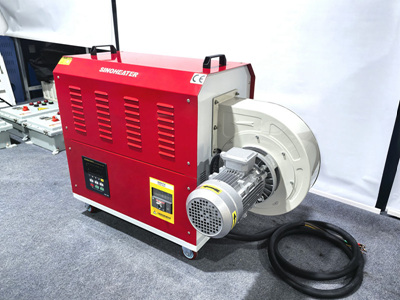
Key Operating Points for Using Hot Air Machines in Leather Product Shaping
Temperature Control Precision for Different Leather Types
Leather materials exhibit varying thermal responses, necessitating precise temperature adjustments during hot air heating. For example, full-grain leather, known for its natural grain retention, requires lower temperatures (typically 80–120°C) to prevent grain cracking. This is because its dense collagen structure is sensitive to rapid thermal expansion. In contrast, synthetic leather blends containing polyurethane (PU) or polyvinyl chloride (PVC) demand higher temperatures (140–180°C) to activate their thermoplastic properties, enabling effective shaping.
Advanced hot air systems integrate PID controllers to maintain temperature stability within ±2°C. These systems analyze real-time feedback from infrared sensors placed near the leather surface, adjusting heating element output dynamically. For instance, when processing delicate sheepskin, the controller reduces power output by 30% upon detecting a 105°C threshold, preventing overheating. This level of precision is critical for achieving consistent shaping results across batches.
Airflow Optimization for Uniform Heating
The spatial arrangement of airflow nozzles directly impacts heating uniformity. Dual-sided airflow configurations, where nozzles are positioned above and below the leather material, are particularly effective for thick hides (e.g., cowhide with 2–3mm thickness). This setup ensures simultaneous heating of both surfaces, reducing the risk of warping caused by uneven thermal penetration.
For thin leather types like calfskin (0.5–1mm thick), a single-sided, adjustable-angle nozzle design proves superior. By directing airflow at a 45° angle, operators can concentrate heat on specific shaping areas without overheating adjacent regions. This method is commonly used in producing structured handbags, where precise curvature is required around edges and corners.
Variable airflow velocity control further enhances adaptability. High-velocity settings (8–12 m/s) are ideal for rapid initial heating of large-area sections, while low-velocity modes (3–5 m/s) allow for fine-tuning during detailed shaping processes. Some systems incorporate servo motors to automate nozzle movement, enabling programmed heating paths that follow complex product designs.
Integration with Shaping Tools and Processes
Hot air machines often work in tandem with mechanical shaping tools to achieve desired forms. For example, when creating three-dimensional shapes like rounded handles or contoured bag bodies, operators first apply localized hot air heating to soften specific leather zones. This is followed by immediate pressing with heated molds (typically maintained at 100–150°C), which embed the shape into the material.
In automated production lines, hot air machines are synchronized with conveyor systems to ensure consistent processing times. The leather passes through a heating tunnel where hot air is applied for 15–30 seconds, depending on material thickness, before entering the shaping station. This sequential approach minimizes handling time and reduces the risk of premature cooling, which could compromise shaping quality.
For post-shaping treatments, hot air is used to activate adhesives in laminated leather products. By directing controlled heat onto bonding areas, the adhesive melts uniformly, creating strong, durable joins without damaging the leather surface. This technique is widely applied in assembling multi-layered leather components for luxury goods.
Safety Protocols and Maintenance Practices
Operating hot air machines in leather shaping requires strict adherence to safety guidelines. Operators must wear heat-resistant gloves and face shields to protect against accidental contact with high-temperature nozzles (which can reach 200–250°C during operation). Additionally, proper ventilation systems are essential to disperse fumes generated during heating, especially when processing leather treated with chemical finishes.
Regular maintenance of hot air machines ensures optimal performance and extends equipment lifespan. Key tasks include cleaning air filters weekly to prevent clogging, which could reduce airflow efficiency by up to 40%. Heating elements should be inspected monthly for signs of wear or corrosion, as damaged components can cause uneven heating or electrical hazards.
Calibration of temperature sensors is another critical maintenance activity. Over time, sensor accuracy may drift, leading to temperature deviations that affect shaping quality. Industry standards recommend recalibrating sensors every six months using certified reference thermometers to maintain ±1°C accuracy. This practice is particularly important for high-value leather products where even minor temperature variations can result in costly rework.