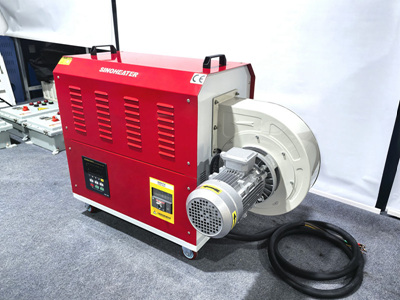
Determining the Heating Area Range for Heat Blowers
When selecting a heat blower for your space, understanding its suitable heating area is crucial. The heating area, measured in square meters, indicates the size of the space that the heat blower can effectively warm up. Several factors influence this range, ensuring you choose the right unit for optimal comfort and energy efficiency.
Factors Affecting the Heating Area of Heat Blowers
Heat Output Capacity
The heat output capacity of a heat blower, usually measured in watts or British Thermal Units (BTUs) per hour, is a primary determinant of its heating area. Higher – capacity heat blowers can generate more heat, enabling them to warm larger spaces. For instance, a heat blower with a relatively low heat output of around 1000 – 2000 watts may be suitable for small rooms, such as a bathroom or a small bedroom, typically ranging from 10 – 20 square meters. On the other hand, a heat blower with a heat output of 5000 – 8000 watts can effectively heat a medium – sized living room or an open – plan kitchen – dining area, which could be around 40 – 70 square meters.
Insulation Quality of the Space
The insulation quality of the building or room where the heat blower will be used has a significant impact on its heating area. Well – insulated spaces retain heat more efficiently, reducing heat loss through walls, windows, and roofs. In a well – insulated room, a heat blower can cover a larger area compared to a poorly insulated one. For example, if a room has double – glazed windows, proper wall insulation, and a well – sealed door, a heat blower with a moderate heat output can effectively heat a space that might be 20 – 30% larger than in a poorly insulated room with similar dimensions. In contrast, in a drafty old building with single – pane windows and little insulation, the heat blower may struggle to warm up even a relatively small area, and its effective heating range will be significantly reduced.
Ceiling Height
Ceiling height is another important factor to consider. Heat rises, so in rooms with high ceilings, more heat is required to warm the entire volume of air. A standard ceiling height is around 2.4 – 2.7 meters. If the ceiling is higher, say 3.5 meters or more, the heat blower will need to generate more heat to ensure that the lower part of the room, where people are located, remains warm. For example, a heat blower that can effectively heat a 30 – square – meter room with a standard ceiling height may only be able to heat a 20 – square – meter room with a high ceiling of 3.5 meters, as it has to warm a larger volume of air.
Estimating Heating Areas for Different Types of Spaces
Small Residential Rooms
Small residential rooms, such as bathrooms, home offices, or small bedrooms, usually have an area ranging from 8 – 20 square meters. For these spaces, a heat blower with a heat output in the range of 1000 – 3000 watts is generally sufficient. These units are compact and can be easily placed on the floor or mounted on the wall. They can quickly raise the temperature in the room, providing instant warmth when needed. In a well – insulated 10 – square – meter bathroom, a 1500 – watt heat blower can maintain a comfortable temperature, especially during colder months.
Medium – Sized Living Areas
Medium – sized living areas, including living rooms, dining rooms, or open – plan kitchen – living spaces, typically have an area between 30 – 70 square meters. Heat blowers with a heat output of 4000 – 8000 watts are suitable for these spaces. These units are often more powerful and may come with additional features such as adjustable thermostats and multiple fan speeds. In a 50 – square – meter living room with good insulation, a 6000 – watt heat blower can evenly distribute heat throughout the space, creating a cozy environment for the whole family.
Large Commercial or Industrial Spaces
Large commercial or industrial spaces, such as warehouses, workshops, or large retail stores, can have an area of several hundred square meters or more. Heating these vast areas requires high – capacity heat blowers with heat outputs of 10,000 watts or higher. These units are usually industrial – grade and are designed to operate continuously for long periods. In a 200 – square – meter warehouse, multiple high – capacity heat blowers may be needed to ensure that the entire space is adequately heated, especially in colder climates.
Importance of Accurate Heating Area Estimation
Energy Efficiency
Accurately estimating the heating area is essential for energy efficiency. Using a heat blower that is too powerful for a small room will result in excessive energy consumption and higher utility bills. Conversely, a heat blower that is too small for a large space will have to work harder and run for longer periods to try to warm up the area, also leading to increased energy usage. By choosing a heat blower with the appropriate heating area range, you can ensure that it operates at its optimal efficiency, saving energy and money in the long run.
Comfort Level
The right heat blower for the right heating area also ensures a consistent and comfortable temperature. An undersized heat blower will leave cold spots in the room, making it uncomfortable for occupants. On the other hand, an oversized heat blower may create a stuffy and overly warm environment, which can also be unpleasant. By matching the heat blower’s capacity to the heating area, you can maintain a comfortable temperature throughout the space, enhancing the overall comfort of the occupants.
Equipment Lifespan
Using a heat blower within its recommended heating area range can also extend its lifespan. When a heat blower is forced to operate outside its capacity, such as trying to heat a much larger area than it is designed for, it puts excessive strain on the motor and other components. This can lead to premature wear and tear, reducing the lifespan of the unit and potentially requiring costly repairs or replacements. By choosing the right heat blower for the space, you can ensure that it operates smoothly and lasts for many years.