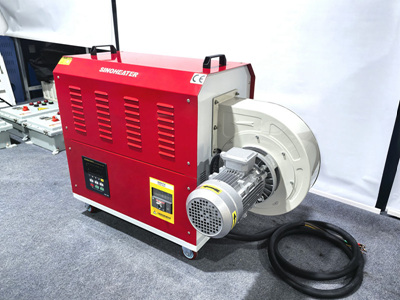
Hot Air Gun Flame Sensor Calibration: How to Get Accurate Flame Detection Again
Your hot air gun keeps shutting down mid-job even though the flame is clearly burning. Or it won’t ignite at all despite the gas flowing fine. Or it cycles on and off constantly like it can’t decide whether the flame is there. In most cases, the problem isn’t the burner or the gas valve — it’s the flame sensor. This tiny component tells the control board whether a flame actually exists, and when it drifts out of calibration, the whole system gets confused.
Flame sensor calibration is one of the most skipped maintenance tasks on hot air guns. Most people replace the burner or the igniter before they ever think to check the sensor. But the sensor is usually the cheapest part to fix, and calibration takes less time than you’d expect.
What the Flame Sensor Actually Does
The flame sensor sits right next to the burner tip. Its job is simple: detect whether a flame is present and tell the control board so the gas valve stays open. No flame detected means the board shuts off the gas to prevent unburned fuel from leaking into the chamber. That’s a safety function — without it, you’d have a gas leak every time the flame went out.
Most hot air guns use one of two sensor types:
Flame rectification sensors — these use the flame itself as part of the circuit. When a flame burns, it ionizes the air between the sensor electrode and ground, creating a tiny DC current. The control board measures this current. If it’s above a threshold, flame is present. If it drops to zero, the board kills the gas. These are common in gas-fired units and they’re remarkably simple.
UV flame sensors — these detect ultraviolet radiation emitted by the flame. A small photodiode or phototransistor picks up the UV signal and sends it to the board. These are more common in diesel and kerosene guns because those flames produce strong UV output. They’re more sensitive than rectification sensors but also more prone to false readings from ambient light.
Both types drift over time. The electrode gets coated with carbon, the photodiode sensitivity changes, or the board’s threshold shifts. When that happens, the sensor either stops detecting a real flame or detects a flame that isn’t there.
Symptoms That Point to a Miscalibrated Flame Sensor
Don’t chase the wrong problem. These symptoms almost always mean the flame sensor is out of whack:
The gun ignites fine but shuts off after a few seconds. The igniter works, the gas flows, the flame lights — then the board decides there’s no flame and cuts the gas. This is the classic flame sensor drift. The sensor is reading below threshold even though the flame is right there.
The gun won’t ignite at all. The board never gets a “flame detected” signal during startup, so it refuses to open the gas valve. You hear the igniter clicking, you smell gas, but nothing happens. The sensor is either dead or so far out of calibration that it can’t see the flame.
The gun cycles on and off repeatedly. The sensor picks up the flame sometimes but not others. This usually means the electrode is dirty or the UV sensor is picking up interference. The board gets a signal, opens the gas, then loses the signal and shuts off — over and over.
The gun runs but the flame looks weak or yellow. Sometimes the sensor isn’t the direct cause, but a miscalibrated sensor can cause the board to restrict gas flow because it thinks the flame is unstable. The burner gets starved and produces a weak, sooty flame.
How to Calibrate a Flame Rectification Sensor
Flame rectification sensors are the easiest to calibrate because they’re passive — no power needed, no complex circuit. The calibration is really just a cleaning and a threshold check.
Cleaning the Sensor Electrode First
Before you do anything else, clean the electrode. The sensor tip sits in the flame path and collects carbon deposits fast. That carbon insulates the electrode and kills the rectification current.
Unscrew the sensor from the burner assembly. Use fine sandpaper or a brass brush to clean the tip until it’s shiny metal. Don’t use steel wool — it leaves particles that can cause false readings. Clean the ground electrode too if there is one.
Blow compressed air through the sensor port to remove any debris. Reinstall it and make sure the tip sits right in the flame path — not off to the side where it can’t “see” the flame properly.
Checking the Rectification Current
With the gun running and the flame lit, measure the DC current between the sensor electrode and ground. Set your multimeter to microamps DC. Touch one lead to the sensor terminal and the other to a clean metal point on the burner housing.
A healthy flame rectification sensor should produce between 1 microamp and 10 microamps depending on flame size and sensor design. If you read zero or near-zero, the electrode is still dirty, the flame isn’t reaching the sensor, or the sensor is dead.
If you get a reading but it’s below the board’s threshold, the sensor needs recalibration. On most boards, there’s a small trim potentiometer near the sensor input. Turn it slowly while monitoring the gun’s behavior. Adjust until the gun stays lit consistently without cycling.
Adjusting the Flame Position Relative to the Sensor
Sometimes the sensor is clean and the current is fine, but the flame isn’t hitting the electrode properly. This happens when the burner tip shifts slightly or the sensor gets bumped out of alignment.
Loosen the sensor mounting screw, reposition the tip so it sits directly in the flame cone, and retighten. The electrode should be about 2mm to 5mm from the flame tip — close enough to ionize, far enough to avoid melting.
How to Calibrate a UV Flame Sensor
UV sensors are trickier because they respond to light, and ambient light can interfere. Calibration here is about cleaning, shielding, and setting the right sensitivity.
Cleaning the Sensor Lens
UV sensors have a small glass or quartz window that lets UV light through to the photodiode. That window gets coated with soot and carbon fast. Wipe it clean with isopropyl alcohol and a lint-free cloth. Don’t scratch the lens — even a smudge will reduce sensitivity.
If the lens is cracked or cloudy, replace the sensor. A damaged lens lets in visible light and creates false readings that no amount of cleaning will fix.
Shielding the Sensor from Ambient Light
UV sensors pick up sunlight, welding arcs, and even bright workshop lights. If your gun cycles on and off only when you’re near a window or under bright lights, the sensor is picking up ambient UV.
Install a small tube or shroud around the sensor so it only “sees” the burner flame. The tube should be about 10mm long and narrow enough to block side light. This forces the sensor to look only at the flame directly in front of it.
Setting the Sensitivity Threshold
Most control boards with UV sensors have a trim potentiometer that sets the detection threshold. With the gun running and the flame stable, turn the potentiometer slowly until the gun runs smoothly without cycling.
Turn it too high and the sensor becomes hypersensitive — it might detect the flame even when the gas is off, which defeats the safety function. Turn it too low and it won’t detect the flame reliably, causing the same shutdown problem you started with.
The sweet spot is where the gun stays lit under normal conditions but shuts off immediately when the flame goes out. Test this by manually blocking the flame with a metal plate — the gun should cut gas within one second.
When Calibration Won’t Fix the Problem
Sometimes the sensor is beyond saving. Know when to stop tweaking and replace it.
The electrode is pitted or corroded. If the sensor tip looks rough, discolored, or eaten away, no amount of cleaning will restore it. The surface area is gone, and the rectification current will never reach threshold. Replace it.
The photodiode is dead. If you measure zero output from a UV sensor even with a strong flame right in front of it, the photodiode has failed. These don’t drift — they just die. Swap it out.
The wiring is damaged. A cracked wire or corroded connector between the sensor and the board will mimic a dead sensor. Check the wiring before replacing the sensor. A bad connection is easier and cheaper to fix.
The control board input circuit is fried. If the sensor tests good but the board still doesn’t detect flame, the input amplifier on the board might be dead. This is less common but it happens, especially after a power surge. At that point, you’re looking at a board replacement.
Preventing Flame Sensor Drift
Most flame sensor problems come from three things you can control:
Dirty burner tips. A sooty burner produces a flame that coats the sensor fast. Keep the burner tip clean. Wipe it with a damp cloth after every use. A clean flame produces less carbon, which means the sensor stays cleaner longer.
Moisture in the sensor housing. If water gets into the sensor connector, it corrodes the contacts and creates intermittent readings. Keep the sensor connector dry. Use dielectric grease on the pins to repel moisture.
Physical damage to the sensor tip. The sensor tip is fragile. Don’t bang it against the workbench or let it hit metal parts. A bent or cracked tip won’t detect flame properly no matter how clean it is.
A flame sensor that’s properly calibrated and kept clean will last the life of the gun. Most failures aren’t sensor death — they’re neglect. A five-minute cleaning and a thirty-second calibration check every few months keeps the gun running safely without surprise shutdowns.