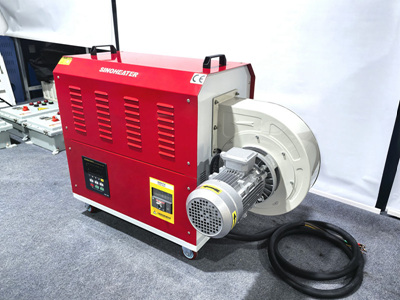
Understanding the Dimensions of Heat Blowers: Length, Width, and Height Specifications
When it comes to selecting a heat blower for your space, considering its physical dimensions is as important as evaluating its heating capacity. The length, width, and height of a heat blower can impact its installation, portability, and how well it fits into your available space. Here’s a comprehensive look at the typical size ranges and factors influencing the dimensions of heat blowers.
Common Size Ranges for Different Types of Heat Blowers
Portable Heat Blowers
Portable heat blowers are designed for easy movement and flexibility in use. These units are often compact and lightweight, making them ideal for small – to medium – sized spaces or for temporary heating needs. In terms of dimensions, portable heat blowers usually have a length ranging from 30 to 60 centimeters, a width of 20 to 40 centimeters, and a height of 30 to 50 centimeters. Their relatively small size allows them to be placed on tables, shelves, or directly on the floor without taking up too much space. For example, a small portable heat blower might measure 35 cm in length, 25 cm in width, and 35 cm in height, making it easy to carry around and store when not in use.
Wall – Mounted Heat Blowers
Wall – mounted heat blowers are a great option for saving floor space. They are typically installed on walls, often near the ceiling, to distribute heat evenly throughout the room. The dimensions of wall – mounted heat blowers can vary depending on their heating capacity. Generally, they have a length between 50 and 90 centimeters, a width of 15 to 30 centimeters, and a height of 20 to 40 centimeters. The slim profile of these units allows them to blend seamlessly into the wall, providing efficient heating without being obtrusive. A medium – sized wall – mounted heat blower could have dimensions of 70 cm in length, 20 cm in width, and 30 cm in height, suitable for heating a medium – sized bedroom or office.
Floor – Standing Heat Blowers
Floor – standing heat blowers are larger and more powerful units, often used in larger spaces such as living rooms, workshops, or commercial areas. These heat blowers are designed to stand on the floor and can have a more robust appearance. Their length can range from 60 to 120 centimeters, width from 30 to 50 centimeters, and height from 70 to 120 centimeters. The larger size allows for a more powerful heating element and a larger fan, enabling them to heat larger volumes of air. For instance, a high – capacity floor – standing heat blower might measure 90 cm in length, 40 cm in width, and 100 cm in height, making it capable of providing sufficient heat for a large living room or open – plan space.
Factors Influencing the Dimensions of Heat Blowers
Heating Capacity
The heating capacity of a heat blower is a major factor in determining its dimensions. Higher – capacity heat blowers require larger heating elements and fans to generate and distribute more heat. As a result, they tend to be larger in size. For example, a heat blower with a heating capacity of 5000 watts will generally be larger than a 2000 – watt unit. The larger heating element and fan need more space to operate efficiently, which is reflected in the overall dimensions of the heat blower.
Airflow Requirements
The amount of airflow a heat blower needs to generate also affects its size. To move a large volume of air, a heat blower requires a larger fan. A larger fan takes up more space within the unit, increasing its width and height. Additionally, the ductwork or air outlets may need to be larger to accommodate the increased airflow, further influencing the overall dimensions. For example, a heat blower designed for a large workshop will need a more powerful fan and larger air outlets compared to a unit for a small bedroom, resulting in a larger overall size.
Design and Aesthetics
The design and aesthetic considerations of a heat blower can also play a role in its dimensions. Some heat blowers are designed to be more visually appealing and may have a sleeker, more modern appearance. This can involve using different materials or shaping the unit in a way that affects its length, width, and height. For example, a heat blower with a curved or rounded design may have different dimensions compared to a traditional rectangular – shaped unit, even if they have similar heating capacities. Designers may also incorporate features such as built – in handles or control panels, which can add to the overall size of the heat blower.
Importance of Considering Dimensions Before Purchase
Installation Space
Before buying a heat blower, it’s crucial to consider the available installation space. Whether you plan to place it on the floor, mount it on the wall, or set it on a table, you need to ensure that there is enough room for the unit to fit comfortably. Measuring the available space accurately can help you choose a heat blower with the right dimensions. For example, if you have a narrow hallway where you want to install a wall – mounted heat blower, you’ll need to select a unit with a relatively slim width to fit within the available space.
Portability Needs
If you need a portable heat blower, its dimensions will directly impact its portability. A smaller and lighter unit will be easier to carry around and move from one room to another. On the other hand, a larger and heavier heat blower may be more difficult to transport, limiting its use to a specific area. Consider how often you’ll need to move the heat blower and choose dimensions that balance heating capacity with portability.
Visual Integration
The dimensions of a heat blower can also affect how well it integrates into your existing decor. A large, bulky heat blower may stand out and disrupt the visual harmony of a room, while a smaller, more streamlined unit can blend in more seamlessly. By considering the dimensions in relation to the room’s design and furniture, you can choose a heat blower that not only provides efficient heating but also enhances the overall aesthetic of the space.