
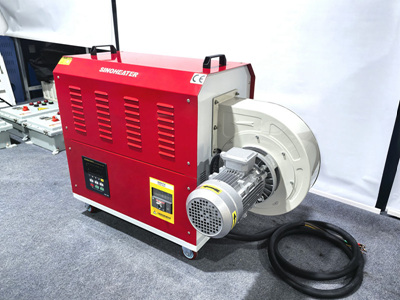
High-Power Constant-Temperature Industrial Hot Air Blowers: A Deep Dive into Performance and Applications
Industrial hot air blowers designed for high-power, constant-temperature operations are critical components in manufacturing, processing, and material handling. These systems combine robust heating capabilities with precise thermal regulation to meet the demands of large-scale applications. Below, we explore their core features, operational mechanisms, and common use cases.
Thermal Performance and Output Stability
High-power industrial hot air blowers are engineered to deliver consistent air temperatures across extended operational periods. Advanced models achieve temperature ranges spanning from moderate warmth for sensitive materials to extreme heat for industrial processes. For instance, certain systems maintain stable outputs up to 650°C, while others focus on lower ranges like 51°C to 135°C for energy-efficient drying cycles.
The stability of these systems relies on integrated thermal control mechanisms. Many units incorporate PID (Proportional-Integral-Derivative) controllers or digital interfaces that adjust heating elements in real time to compensate for environmental fluctuations. This ensures uniform heat distribution even in environments with varying airflow or ambient temperatures.
Key Factors Influencing Temperature Control
- Heating Element Design: Nichrome or ceramic coils are commonly used for their rapid response times and longevity under high-temperature conditions.
- Airflow Management: Variable-speed fans and adjustable ducting allow operators to tailor heat distribution based on process requirements.
- Sensor Integration: Thermocouples or RTDs (Resistance Temperature Detectors) provide continuous feedback to maintain target temperatures within tight tolerances.
Structural Durability and Operational Flexibility
Industrial environments demand equipment that withstands harsh conditions, including dust, moisture, and mechanical stress. High-power hot air blowers are typically housed in stainless steel or powder-coated enclosures to resist corrosion and physical damage. Some models feature reinforced frames or vibration-dampening mounts to ensure stability during prolonged use.
Mounting and Configuration Options
- Portable Units: Equipped with casters or handles for easy relocation between workstations.
- Wall-Mounted Systems: Ideal for space-constrained areas, these units save floor space while directing heat precisely.
- Inline Designs: Integrated into ductwork for centralized heating in large facilities, such as drying tunnels or preheating chambers.
Safety and Compliance Features
Safety is paramount in industrial heating applications. Modern hot air blowers incorporate multiple layers of protection to prevent overheating, electrical faults, or operator exposure to hazardous conditions.
Essential Safety Mechanisms
- Thermal Cutoffs: Automatically shut down the system if temperatures exceed safe limits.
- Overcurrent Protection: Prevents damage to electrical components by interrupting power during surges.
- Grounded Enclosures: Minimize the risk of electric shock in wet or conductive environments.
Common Industrial Applications
The versatility of high-power constant-temperature hot air blowers makes them indispensable across diverse sectors. Their ability to deliver controlled heat without open flames or external fuel sources enhances safety and efficiency in sensitive operations.
Process Heating and Drying
- Paint Curing: Accelerates solvent evaporation in automotive or aerospace coating lines.
- Shrink Packaging: Applies uniform heat to activate shrink-wrap films without scorching materials.
- Moisture Removal: Dries textiles, paper, or agricultural products in continuous production lines.
Material Preparation and Treatment
- Preheating: Warms metal sheets or plastic resins before molding or stamping to improve flow properties.
- Dehumidification: Reduces humidity in storage areas or manufacturing zones to prevent corrosion or clumping.
Energy-Efficient Alternatives
Some advanced systems leverage innovative designs to reduce energy consumption. For example, heater-less technologies use the inherent heat generated by air compression to achieve temperature rises of 51°C to 135°C, eliminating the need for external heating elements. This approach cuts energy costs by up to 75% while maintaining reliable performance in drying or curing applications.
Conclusion
High-power constant-temperature industrial hot air blowers represent a fusion of precision engineering and rugged design. By combining stable thermal output, durable construction, and advanced safety features, these systems address the complex demands of modern manufacturing. Whether used for drying, curing, or preheating, their adaptability ensures they remain vital tools across industries ranging from automotive to food processing. As technology evolves, innovations in energy efficiency and control systems will further expand their applications in sustainable industrial practices.

