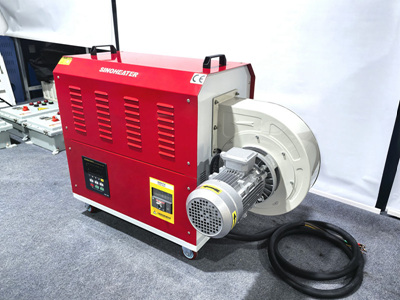
Noise Level Standards for Heat Blowers: Understanding Decibel Ratings
When choosing a heat blower, considering its noise level is as important as evaluating its heating capacity and airflow. Excessive noise can disrupt daily activities, cause discomfort in living or working spaces, and even violate local noise regulations. Understanding the decibel (dB) ratings and noise standards for heat blowers helps in making an informed decision that balances performance with peace and quiet.
Common Noise Level Ranges for Heat Blowers
Residential – Grade Heat Blowers
In residential settings, heat blowers are expected to operate quietly to avoid disturbing occupants. Typically, residential – grade heat blowers produce noise levels in the range of 40 dB to 60 dB. At 40 dB, the noise is similar to a quiet library or a whisper, making it barely noticeable in a living room or bedroom. As the noise level approaches 60 dB, it becomes comparable to a normal conversation, which is still acceptable in most residential areas but may be more noticeable in quiet environments. These lower noise levels are achieved through the use of advanced motor designs, sound – dampening materials, and optimized fan blade shapes.
Small Commercial Heat Blowers
Small commercial spaces, such as offices, retail stores, or small restaurants, have slightly higher noise tolerance compared to residential areas. Heat blowers used in these settings usually generate noise levels between 50 dB and 70 dB. A noise level of 50 dB is similar to a soft rainfall, which is unlikely to cause significant disruption in an office environment. At 70 dB, the noise is similar to a vacuum cleaner, which may be more noticeable but is still manageable in a busy commercial space. These heat blowers often incorporate features like variable – speed motors and better insulation to control noise within this range.
Large Industrial Heat Blowers
Large industrial facilities, such as factories and warehouses, have different noise considerations. While the primary focus is on performance, noise levels still need to be controlled to ensure a safe and comfortable working environment for employees. Industrial heat blowers can produce noise levels ranging from 70 dB to 90 dB or even higher in some cases. A noise level of 70 dB is similar to a busy street, and at 90 dB, it is comparable to a lawnmower. To manage noise in industrial settings, heat blowers may be equipped with noise – reducing enclosures, vibration – dampening mounts, and specialized fan designs.
Factors Influencing Heat Blower Noise Levels
Motor Type and Speed
The type and speed of the motor used in a heat blower have a significant impact on its noise level. High – speed motors tend to generate more noise due to increased vibration and air turbulence. On the other hand, variable – speed motors allow for more precise control over the fan speed, enabling the heat blower to operate at lower speeds when full power is not required, thus reducing noise. Additionally, brushless motors are generally quieter than brushed motors because they have fewer moving parts and generate less electrical noise.
Fan Blade Design
The design of the fan blades also plays a crucial role in determining the noise level of a heat blower. Blades with a smooth surface and an appropriate curvature can reduce air turbulence and vibration, resulting in lower noise emissions. Some fan blades are designed with serrated edges or other aerodynamic features to break up airflow and minimize noise. The number of blades can also affect noise; in general, more blades can distribute the airflow more evenly but may also increase noise if not designed properly.
Enclosure and Insulation
The enclosure and insulation of a heat blower are important for containing and reducing noise. A well – designed enclosure can prevent noise from escaping into the surrounding environment. Sound – absorbing materials, such as foam or fiberglass, can be used inside the enclosure to absorb and dampen vibrations and sound waves. Additionally, proper sealing of the enclosure can prevent air leaks, which can also contribute to noise.
Noise Regulations and Standards for Heat Blowers
Local Noise Ordinances
Many local governments have noise ordinances in place to regulate the amount of noise that can be generated in different areas, such as residential, commercial, and industrial zones. These ordinances typically specify maximum noise levels in decibels for different times of the day. For example, in a residential area, the maximum noise level during the day may be 55 dB, and at night it may be lower, around 45 dB. Heat blowers used in these areas must comply with these local regulations to avoid fines and complaints from neighbors.
Industry – Specific Standards
In addition to local ordinances, there may be industry – specific standards for heat blower noise levels. For example, in the food processing industry, where cleanliness and hygiene are critical, heat blowers may need to meet specific noise requirements to ensure a quiet and safe working environment. These standards may be set by industry associations or regulatory bodies and may include additional testing and certification requirements.
Occupational Safety and Health Regulations
Occupational safety and health regulations also play a role in determining acceptable noise levels in the workplace. Prolonged exposure to high – noise levels can cause hearing damage and other health problems for employees. Therefore, heat blowers used in industrial settings must comply with occupational safety and health standards, which may limit the maximum noise level to a certain decibel value and require the use of hearing protection devices if necessary.