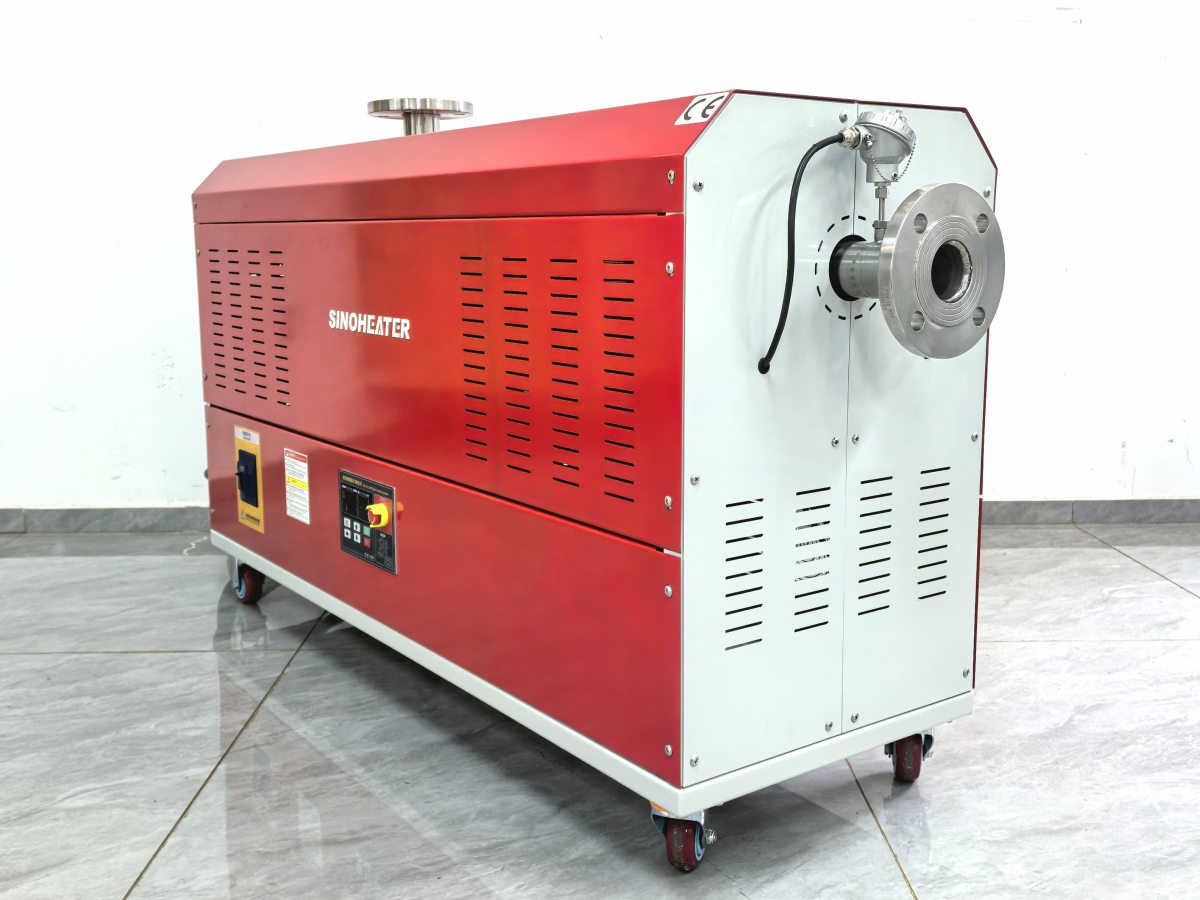
Tip-Over Power-Off Testing for Heat Blowers After Installation: A Field Inspector’s Guide
Here’s a scenario nobody wants to think about. A heat blower sits on a shelf, a desk, or a floor-mounted bracket. Someone bumps it. A pet knocks it over. The unit tips, the heating element stays on, and within minutes the surrounding area catches fire. This happens more often than most people realize, which is exactly why tip-over power-off testing exists as a mandatory safety check after every installation.
This test confirms one simple thing: when the heat blower falls over, the power cuts instantly. Not in five seconds. Not in two seconds. Instantly.
Why Tip-Over Testing Is Not Optional
Any heating appliance that can fall over while running a heating element is a fire hazard by default. Heat blowers are particularly vulnerable because they’re often lightweight, have high center-of-gravity designs, and get placed on surfaces that aren’t always level.
The tip-over switch inside the unit is a mechanical or electronic sensor that detects when the blower tilts beyond a safe angle — usually 30 to 45 degrees from vertical. When that happens, the switch should open the circuit and kill power to the heating element and fan motor simultaneously.
But here’s the catch. That switch can fail. The spring inside can lose tension. The contact can weld shut. The sensor can drift out of calibration. Without post-installation testing, you have no way of knowing whether the switch actually works when it matters most.
How Tip-Over Power-Off Testing Actually Works
The Tilt Angle Test
The most basic test involves physically tilting the unit to the trigger angle and verifying that power cuts within the required time frame.
Set the heat blower to its maximum heating mode and let it run for at least five minutes so the internal components reach operating temperature. This matters because some tip-over switches behave differently when hot versus cold.
Now tilt the unit slowly until it reaches the manufacturer’s specified trigger angle — typically between 30 and 45 degrees. The moment the unit passes that angle, the power should shut off completely. Use a stopwatch to measure the response time. The standard requires full power cutoff within two seconds of the tilt event, and many specifications demand it happen in under one second.
Do this test in every direction the unit can realistically fall. Front, back, left, right. A switch that only works when tilting forward but fails when tilting sideways is still a failure.
Repeat Cycling and Durability Verification
One tilt test isn’t enough. The switch needs to work not just the first time, but after hundreds of cycles.
Run the unit through at least 1,000 tip-over cycles during the validation phase. Tilt it, let it reset, tilt it again. After every 200 cycles, do a full functional check — run the blower at maximum power, tilt it, and confirm shutdown still happens within the time limit.
If the switch starts failing after 600 cycles, that’s a design or component quality issue that needs to be caught before the unit ever reaches an end user. A switch that degrades after a few hundred uses gives a false sense of security. It works fine for weeks, then one day it doesn’t.
Power Restart Behavior After Tip-Over
This part gets overlooked constantly. After the unit tips over and power cuts, what happens when someone sets it back upright?
The blower should NOT restart automatically. Period. It needs to require manual intervention — a button press, a switch toggle, something that confirms a real person checked the unit and decided it’s safe to turn back on.
Test this by tipping the unit, waiting 30 seconds, setting it upright, and confirming that it remains off. Then manually restart it and verify normal operation. If the unit fires back up on its own after being reset, that’s a serious safety defect. An unattended heat blower that restarts itself after falling over is basically a fire starter.
Common Failure Modes That Testing Catches
Mechanical Switch Contact Welding
The most common failure in tip-over switches is contact welding. When the heating element draws high current, the electrical arc that forms when the switch opens can melt the contact points together. After that, the switch physically cannot open the circuit — even if the sensor detects a tilt.
Post-installation testing catches this because you’re running the unit at full power when you perform the tilt test. A switch that works fine at low power but welds shut under load will fail the test immediately.
Spring Fatigue and Sensor Drift
Mechanical tilt switches rely on a spring-loaded ball or pendulum. Over time, that spring loses tension. The trigger angle shifts. The unit might not trip until it’s tilted 60 degrees instead of 30, which means it could fall completely flat before the switch activates.
Electronic tilt sensors using MEMS accelerometers can drift out of calibration due to vibration or thermal cycling. A sensor that reads 35 degrees when it should read 30 degrees is a unit that might not protect anything.
Both of these failures are invisible without actual tilt installation.
Wiring and Connection Failures
Sometimes the switch itself is fine, but the wiring between the switch and the power relay has a loose connection. Vibration from the blower’s fan motor can shake a terminal loose over time. A cracked solder joint on the control board can open up after thermal cycling.
After installation, run the tip-over test and also check continuity from the switch to the relay. If the switch triggers but the relay doesn’t respond, you’ve got a wiring problem that no amount of switch testing will reveal.
Testing Frequency and Ongoing Compliance
Don’t treat this as a one-and-done check. Tip-over switches degrade. Springs fatigue. Contacts corrode. A unit that passed on installation day can fail six months later.
Re-test the tip-over function at least once every 12 months for permanently installed units. For portable heat blowers that get moved around frequently, test before every heating season. And any time the unit gets bumped, dropped, or relocated, run the full tilt test again before putting it back into service.
Keep written records of every test. Date, time, ambient conditions, tilt direction, shutdown time, restart behavior, pass or fail. If an incident ever occurs, those records are the first thing investigators look at. They’re also the first thing that keeps you out of legal trouble.
A heat blower that won’t shut off when it falls isn’t just poorly designed. It’s dangerous. Test it, document it, and never skip the tilt.