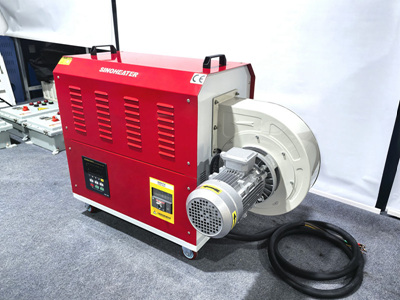
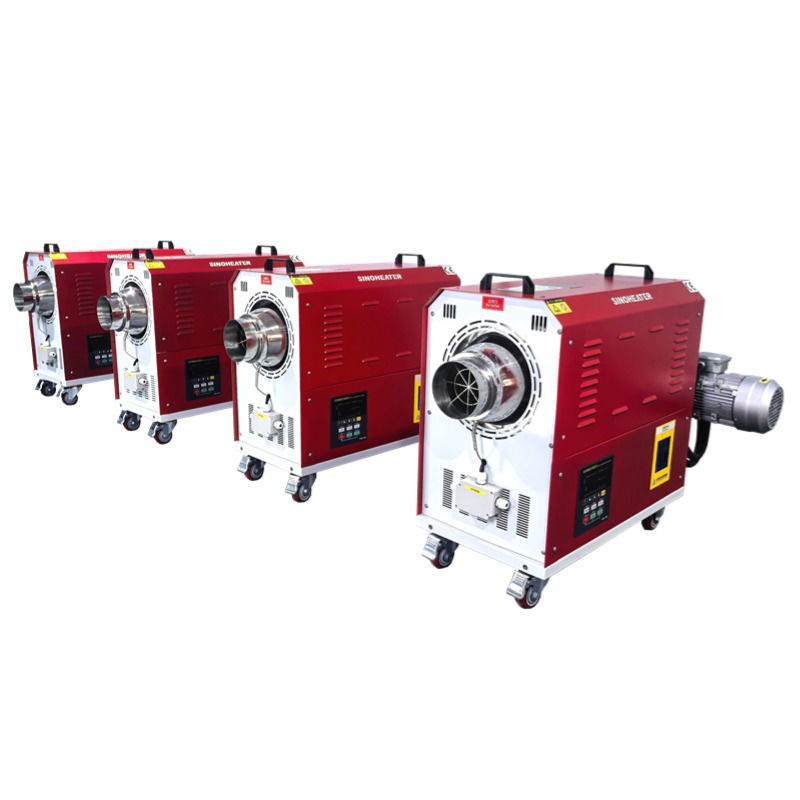
Proper dynamic balance design for hot air blower high speed fan blades lays the foundation for smooth, low-vibration operation even under long continuous running cycles. This design process takes into account not only static weight distribution, but also the complex forces generated at high rotational speeds, ensuring stable performance across all common working conditions.
Blade Profile Symmetry and Mass Distribution Control
Every individual blade is machined to maintain consistent wall thickness and profile curvature along its full span, eliminating unexpected mass deviations that can cause unbalanced force during rotation. The mass center of each blade is carefully aligned to the same radial distance from the central rotor axis, so no single blade carries extra centrifugal load when the assembly spins at rated speed. Small adjustments are made at the root connection area to fine-tune minor mass differences, avoiding unnecessary material removal on the working surface that could disrupt aerodynamic performance. This precise control reduces initial unbalance value significantly before the first dynamic test, cutting down the workload of subsequent correction processes.
Rotor Assembly Coaxiality and Interference Fit Design
The connection between fan blades and the central rotor hub uses a high-precision interference fit structure, ensuring no relative displacement occurs even when the rotor runs at a speed close to the second critical speed. The coaxiality of the entire rotor assembly is strictly controlled within a narrow tolerance range, preventing additional eccentric load caused by misalignment between the blade group and the rotating shaft. The design follows standard industry specifications for high speed rotating equipment, making sure the operating speed stays in a safe gap away from the system’s critical speed to avoid resonance risks. This structural layout maintains stable balance performance even after thousands of start-stop cycles and long hours of high temperature operation.
Unbalance Correction Zone and Process Reserve
Specific correction zones are reserved on non-working surfaces of the blade hub and the outer edge of the blade disc, providing reasonable space for material removal or addition during the dynamic balance testing process. These zones are placed away from the main airflow passage, so any correction work will not change the original aerodynamic design of the fan blade group. The design also takes axial runout and thermal expansion deformation under high speed working conditions into full consideration, ensuring the corrected balance accuracy remains stable even when the equipment reaches full load operating temperature. This arrangement helps extend the service life of supporting bearings, reduces overall system vibration, and supports consistent, reliable operation for hot air blowers in long-term industrial applications.