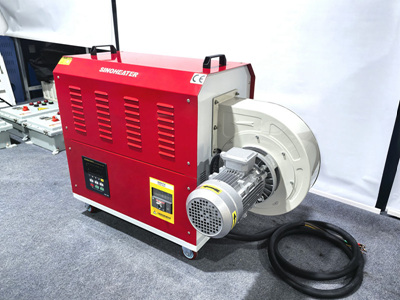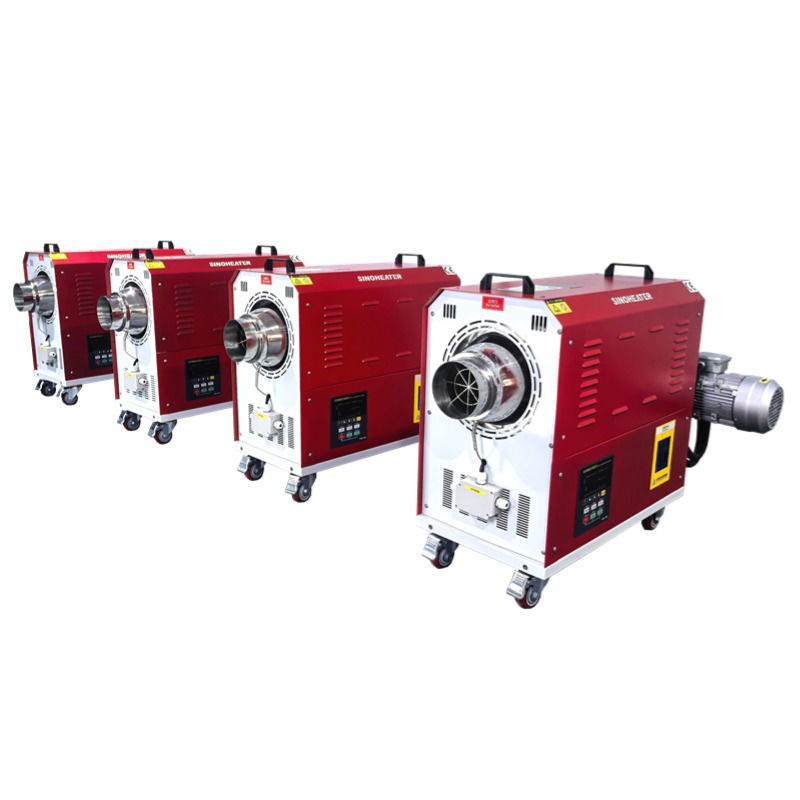
Hot Air Blower Plastic Insulated Housing Safety Characteristics
The plastic insulated housing of a hot air blower serves as a critical protective barrier that separates high-temperature internal components, live electrical parts and external operating personnel, making its safety performance a core consideration for equipment reliability across diverse working scenarios. Unlike uninsulated metal housing designs that carry inherent risks of electrical leakage and surface scalding, properly engineered plastic insulated structures are formulated and tested to meet strict safety standards for both industrial and commercial use cases. These safety features are developed based on decades of real-world operational data, addressing common hazards such as accidental electric shock, unintended heat transfer, flame spread and structural failure under extreme operating conditions.
Electrical Isolation and Leakage Prevention Safety Properties
Every structural detail of the plastic insulated housing is engineered to eliminate potential electrical hazard paths, ensuring reliable protection even when internal electrical components experience unexpected insulation failure.
The continuous single-mold forming structure eliminates internal assembly gaps that could create hidden electrical risk points. Unlike multi-part assembled housings that leave seams and joints where fine conductive dust or moisture can seep through, the integrated molding process creates a fully homogeneous insulating layer that wraps around all live electrical compartments. This uninterrupted barrier maintains consistent dielectric strength across the entire housing surface, preventing stray electrical currents from reaching the external touchable area even after years of exposure to humid or dust-laden working environments.
Embedded reinforced insulating partitions create independent isolation zones between high-voltage electrical components and the outer housing wall. These partitions are formed as an inseparable part of the main housing structure, rather than added as separate auxiliary components, creating extended creepage distances that far exceed standard safety requirements. Even in cases where internal electrical components experience partial discharge or insulation breakdown, these extended isolation paths prevent electrical current from penetrating to the outer surface, eliminating the risk of accidental electric shock for operators who may touch the housing during operation.
Integrated sealed cable entry points are molded directly into the housing wall, with custom contoured openings that form a tight, insulating fit around every incoming and outgoing wire. The plastic material around these openings is thickened intentionally to create an extra layer of isolation between the cable’s conductive core and the outer housing surface. This design also prevents moisture, conductive dust or corrosive liquids from entering the electrical compartment through cable gaps, avoiding the common hazard of electrical leakage caused by contaminant buildup around wiring connections.
High Temperature Resistance and Thermal Safety Features
The plastic insulated housing is formulated and structured to maintain full structural stability and protective performance under sustained high operating temperatures, without introducing new fire or heat-related risks.
Low thermal conductivity material formulation creates a reliable anti-scald barrier that blocks excessive heat transfer from internal high-temperature components to the outer housing surface. Even when internal heating elements operate at maximum rated temperature for extended periods, the insulated housing keeps the external touchable surface at a safe, non-scalding temperature that prevents accidental burn injuries for personnel who may come into contact with the unit. This performance is rigorously tested under continuous full-load operation for thousands of hours, ensuring no gradual thermal degradation that would compromise the anti-scald protection over time.
Self-extinguishing structural properties prevent flame spread even in extreme fault scenarios where internal overheating or electrical arcing occurs. The base plastic material is engineered to stop supporting combustion immediately once the external ignition source is removed, with no dripping of burning molten material that could ignite surrounding flammable objects. All wall thicknesses across different sections of the housing are calibrated to ensure uniform self-extinguishing performance, avoiding thin, weak points that might burn through quickly during an unexpected internal thermal event.
Thermal expansion compensation structures are integrated into the housing design to prevent warping, cracking or seal failure under repeated cycles of heating and cooling. These subtle, contoured flex zones are distributed across non-load-bearing sections of the housing, absorbing the minor dimensional changes that occur as the material heats up and cools down during regular operation. This design eliminates the common safety flaw of cracked housing walls that would expose internal live or high-temperature components, maintaining a fully intact protective enclosure even after tens of thousands of operational cycles.
Mechanical and Environmental Safety Protection Attributes
The plastic insulated housing is engineered to withstand real-world operational stresses and harsh environmental conditions, retaining all its safety functions even after long-term use in demanding work settings.
Impact-resistant molecular structure maintains full housing integrity even after accidental collisions, drops or mechanical shocks that commonly occur in busy workspaces. The material is formulated to absorb and disperse impact energy across a wide area, rather than cracking or shattering into sharp, dangerous fragments that could expose internal components or cause injury to nearby personnel. This performance is verified through standardized drop and impact testing, ensuring the housing does not break open or lose its insulating protection even when the unit is accidentally knocked off a workbench or dropped during transportation.
Weather and aging resistant properties prevent long-term safety performance degradation from prolonged exposure to ultraviolet light, high humidity or chemical fumes. The material formulation includes stable anti-aging additives that stop the plastic from becoming brittle, discolored or structurally weak after years of use in unprotected indoor or semi-outdoor environments. Unlike lower-grade plastic materials that can turn brittle and crack after a few months of UV exposure, this insulated housing maintains its full impact resistance and electrical isolation capabilities for the entire rated service life of the equipment.
Anti-static surface treatment prevents dangerous static charge buildup on the housing outer surface, especially in low-humidity working environments where static discharge could create a spark hazard. The treatment is integrated into the base material rather than applied as a temporary surface coating, ensuring the anti-static performance does not wear off even after repeated wiping, cleaning and long-term handling. This safety feature eliminates the risk of unintended static discharge that could ignite flammable airborne particles or disrupt sensitive nearby electronic equipment, making the housing suitable for use in environments with strict static control requirements.