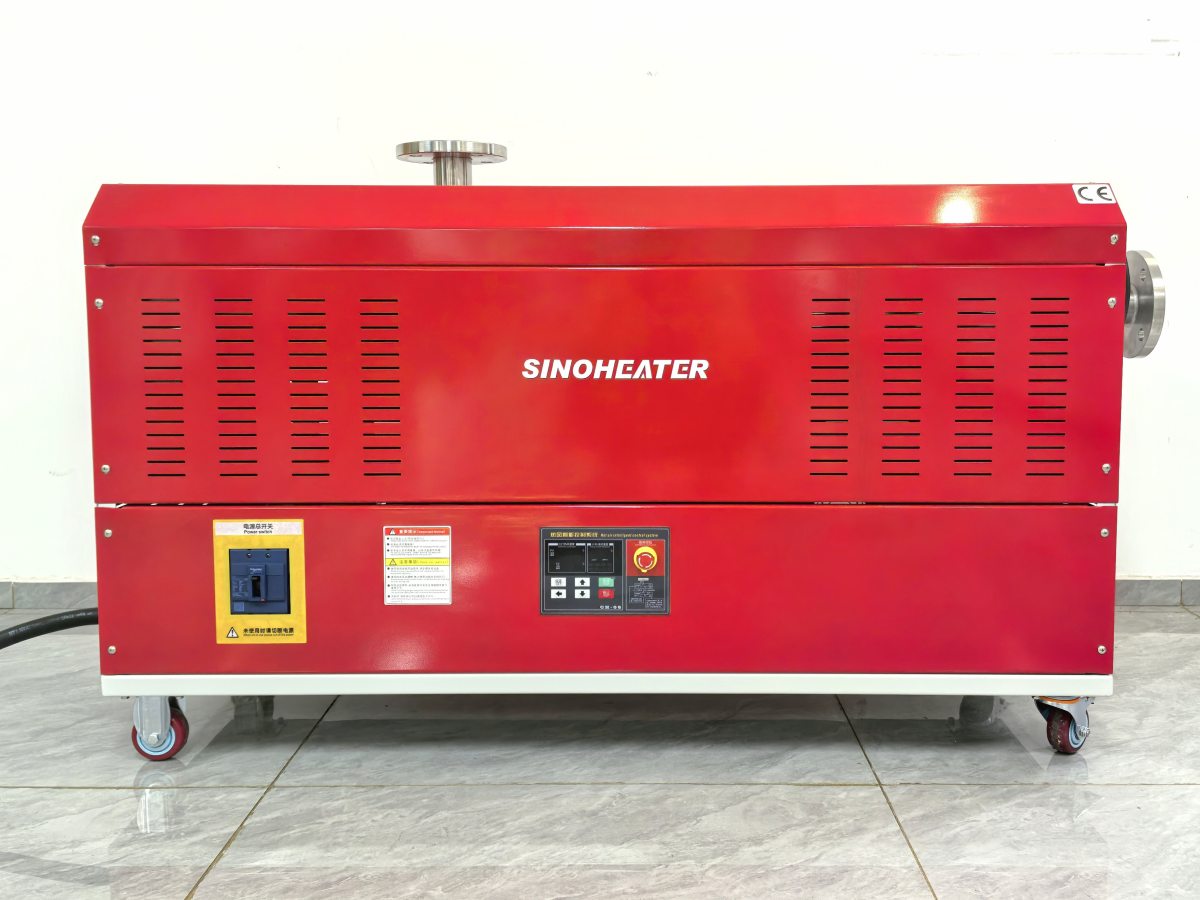
Suspended overhead installation for industrial hot air blowers positions the unit above the work floor, freeing up valuable ground space and creating unobstructed airflow patterns that distribute heated air evenly across large industrial work areas. This configuration is widely used in facilities where floor space is at a premium, or where targeted downward directed heat flow is required to support drying, curing, or temperature regulation processes. When executed with proper structural planning and process alignment, this installation style delivers consistent performance, easy access for maintenance, and minimal interference with daily floor operations.
Structural Load and Suspension Point Engineering
Every suspended overhead installation starts with a full assessment of the building’s ceiling structure, to confirm every mounting point can safely support the total static and dynamic load of the hot air blower plus any attached ducting and accessories. Engineers map out the exact weight distribution across all suspension anchors, ensuring each point is secured directly to structural beams, trusses, or reinforced ceiling joists rather than being fastened only to thin ceiling panels. Vibration isolation elements are fitted between the blower body and suspension hardware, to prevent operating vibration from transferring into the building structure and creating unwanted noise or loosening mounting connections over time. This eliminates the hidden risk of structural fatigue that can develop if load limits are not properly calculated during the planning stage.
Airflow Direction and Work Zone Coverage Alignment
The exact mounting position and orientation of the suspended unit are carefully calibrated to match the specific airflow requirements of the target work zone. Teams calculate the heated air throw distance, dispersion pattern, and temperature distribution across the full area below the blower, adjusting mounting height and outlet angle to ensure no dead zones or overheated spots appear in the coverage area. For processes that require highly targeted heat delivery, short directional duct extensions can be fitted to the blower outlet, guiding the exact flow of hot air to the specific process points that need it most. This careful alignment ensures the blower delivers the intended process performance without wasting heated air on unoccupied areas far from the work floor.
Thermal Expansion and Ducting Flexibility Design
Industrial hot air blowers generate significant heat during continuous operation, which causes metal components and connected ducting to expand noticeably as they reach full operating temperature. Suspended overhead installations include dedicated flexible compensator sections between the blower outlet and rigid ductwork, absorbing this thermal movement to prevent unwanted stress that would warp mounting points, crack duct seams, or pull connections loose. All ducting runs are also fitted with their own independent secondary suspension supports, so their weight is not transferred directly to the blower housing. This prevents unnecessary mechanical load on the blower body that could misalign internal components over thousands of hours of operation.
Overhead Service and Maintenance Access Layout
Since the unit is positioned above floor level, the installation layout is planned to make all regular service points easily accessible via fixed access platforms, fold down maintenance ladders, or rated lift equipment. All fasteners that secure the blower housing, filter access panels, and internal inspection covers are oriented toward the accessible side of the unit, so technicians do not need to reach over hot ducting or unstable components during routine checks. The electrical junction box and control connection points are also positioned at a convenient working height, eliminating the need for awkward overreaching during wiring inspection or troubleshooting work. This design ensures regular maintenance tasks can be completed quickly and safely, without requiring full system disassembly.
Safety Clearance and Overheat Protection Configuration
Suspended overhead installations maintain strict minimum clearance distances between the hot air blower housing and any nearby combustible ceiling materials, overhead utility lines, or roof structural components. High temperature resistant insulation is fitted to all external hot surfaces that sit close to building materials, preventing unintended radiant heat transfer that could raise surrounding surface temperatures to unsafe levels. Independent overheat detection sensors are mounted on the blower housing and in the surrounding overhead space, triggering automatic safety shutdown if temperatures rise outside the normal safe operating range. This layered protection ensures the unit operates reliably even during extended continuous runtime, with no risk of unintended heat related safety issues developing in the overhead space.