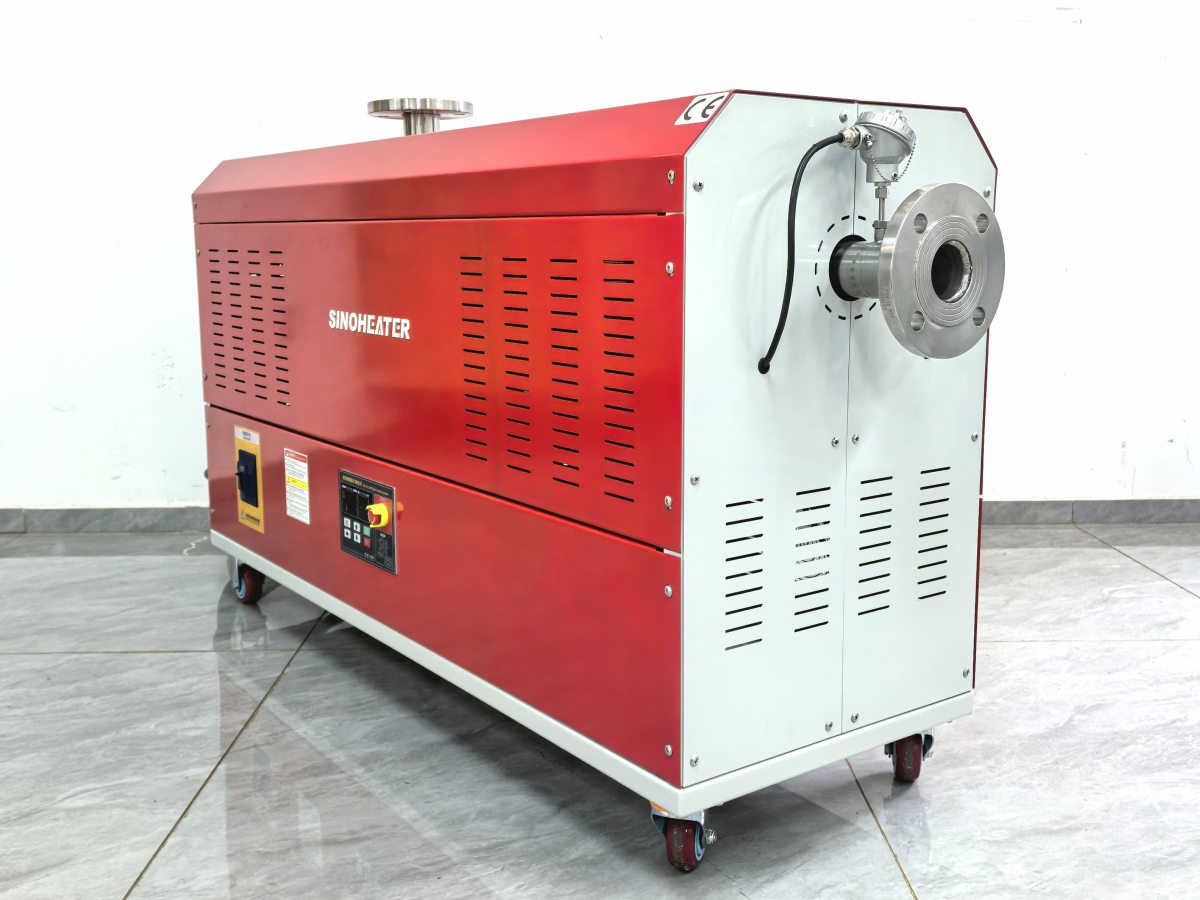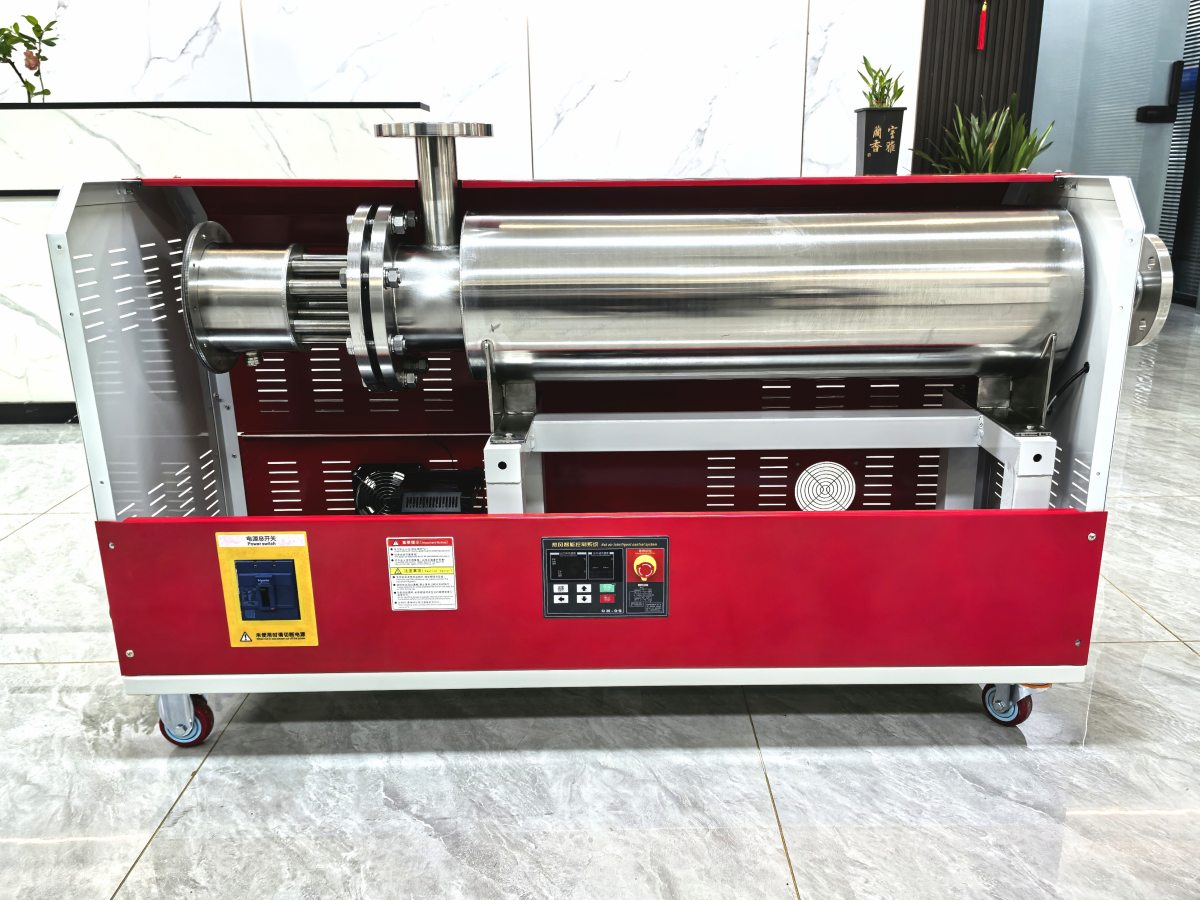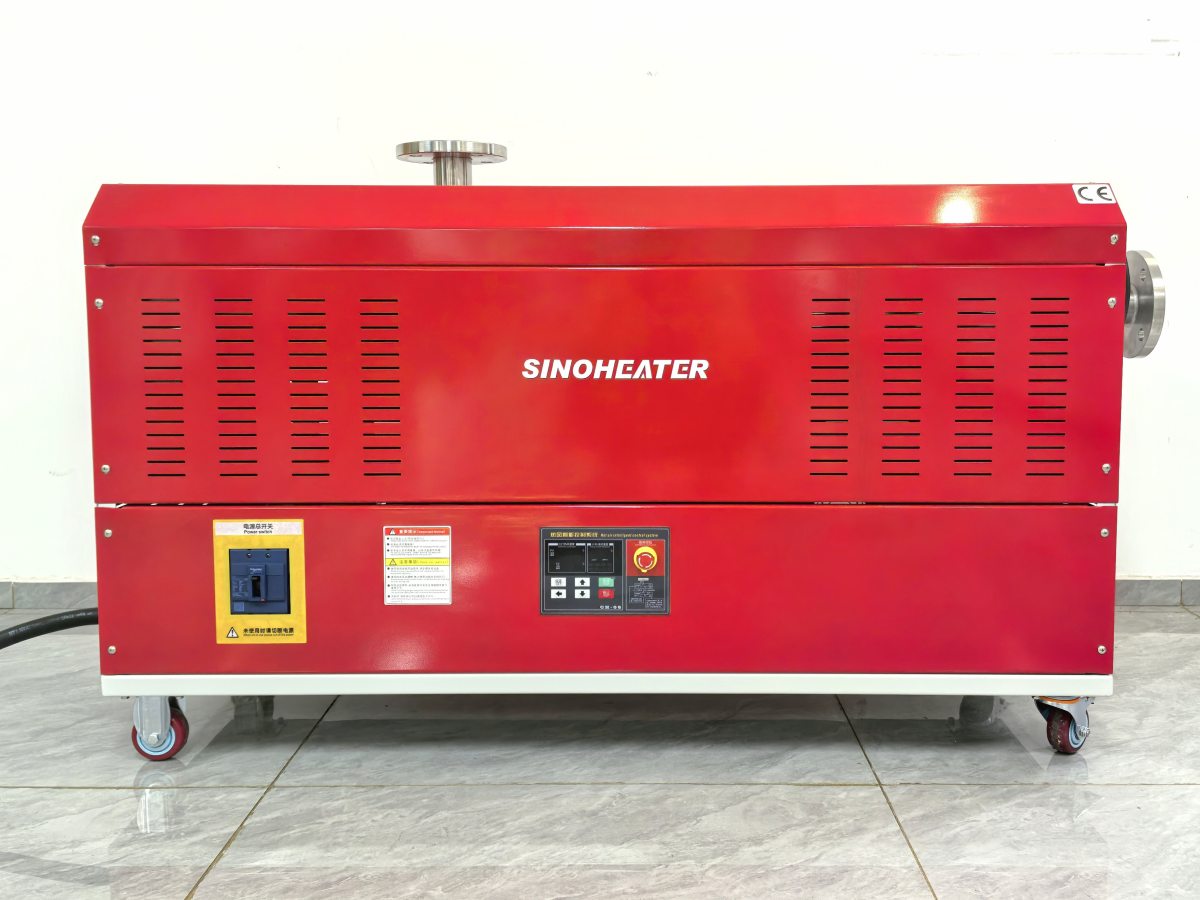
An effective air pressure boosting internal runner design for a hot air blower focuses on efficiently converting fan energy into higher static pressure, enabling the hot air to overcome resistance in ducts, hoses or dense materials. This design centers on the precise shaping and staging of internal air passages to accelerate and direct airflow with minimal energy loss.
Converging Inlet and Impeller Interaction Zone
The design begins at the interface between the fan impeller and the runner inlet. This section features a smoothly converging shape that gradually reduces the cross-sectional area. This acceleration section efficiently captures the high-volume, lower-pressure air from the impeller blades and begins to increase its velocity. The contour of this convergence is carefully calculated to match the airflow characteristics of the specific impeller, minimizing turbulence and flow separation that can cause noise and energy loss. The clearance between the impeller tips and the runner wall in this zone is kept to a precise minimum, reducing the backflow of air from the high-pressure side to the low-pressure inlet, a key factor in boosting overall pressure capability.
Constant-Velocity or Gradually Expanding Mid-Passage
Following the initial acceleration, the runner often transitions into a section with a constant cross-sectional area or a very gradually expanding one. This mid-passage allows the turbulent, high-velocity air from the impeller to stabilize and its kinetic energy to be more uniformly distributed across the flow profile. In multi-stage boosting designs, this section may house additional static guide vanes. These vanes are angled to straighten the swirling airflow coming from the impeller, converting rotational velocity into more useful axial velocity and pressure, and preparing the flow for entry into a subsequent stage or the final diffuser. The surfaces in this passage are kept exceptionally smooth to reduce frictional losses.
Diverging Outlet Diffuser for Pressure Recovery
The final and most critical section for pressure boosting is the diverging outlet diffuser. This section gradually increases in cross-sectional area, which slows down the high-velocity air. According to fluid dynamics principles (Bernoulli’s principle), this reduction in velocity results in a conversion of kinetic energy into static pressure—the desired “pressure boost.” The angle of this divergence is carefully optimized; too steep an angle causes the airflow to separate from the walls, creating eddies and losing energy, while too shallow an angle makes the runner unnecessarily long. The internal contours of the diffuser are often slightly curved to guide the airflow more naturally, ensuring smooth deceleration and maximum pressure recovery before the air exits into the heating chamber or outlet duct.