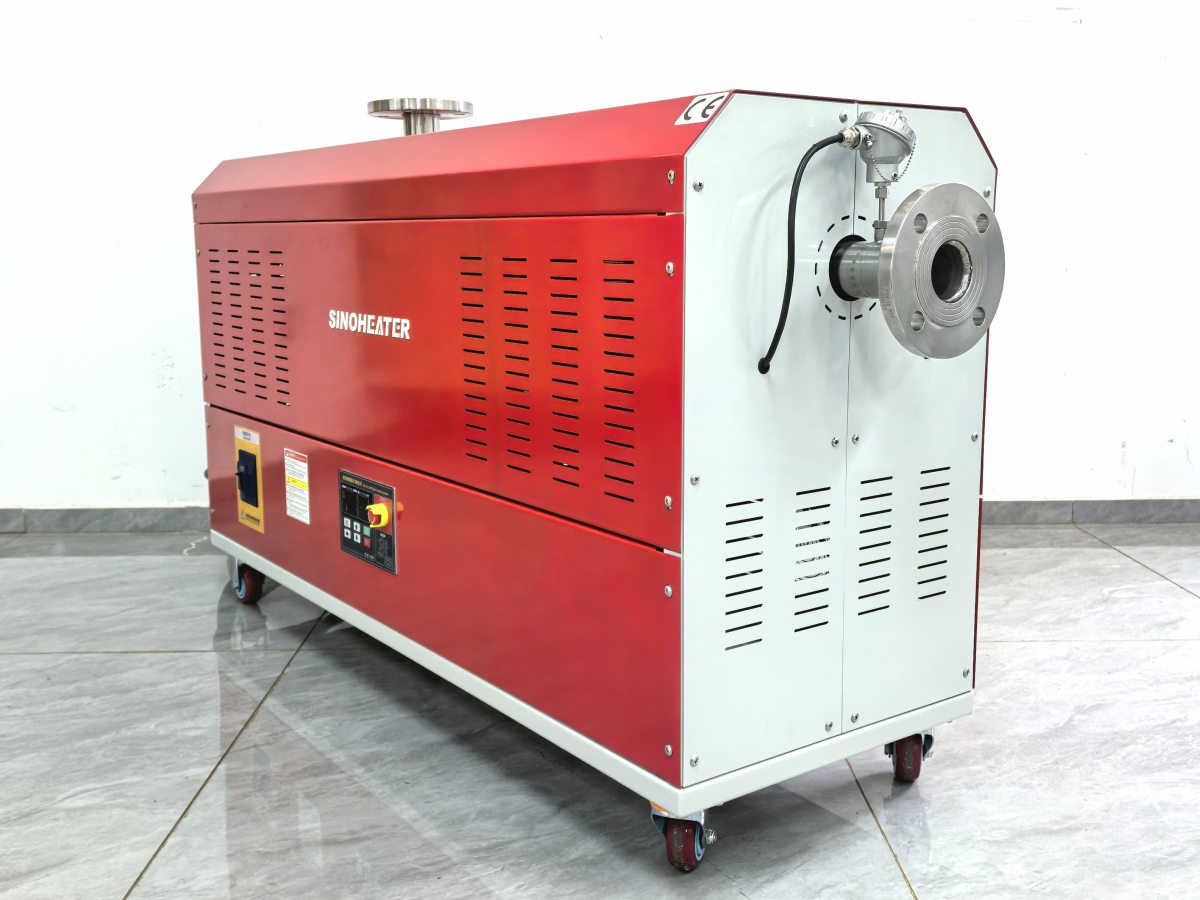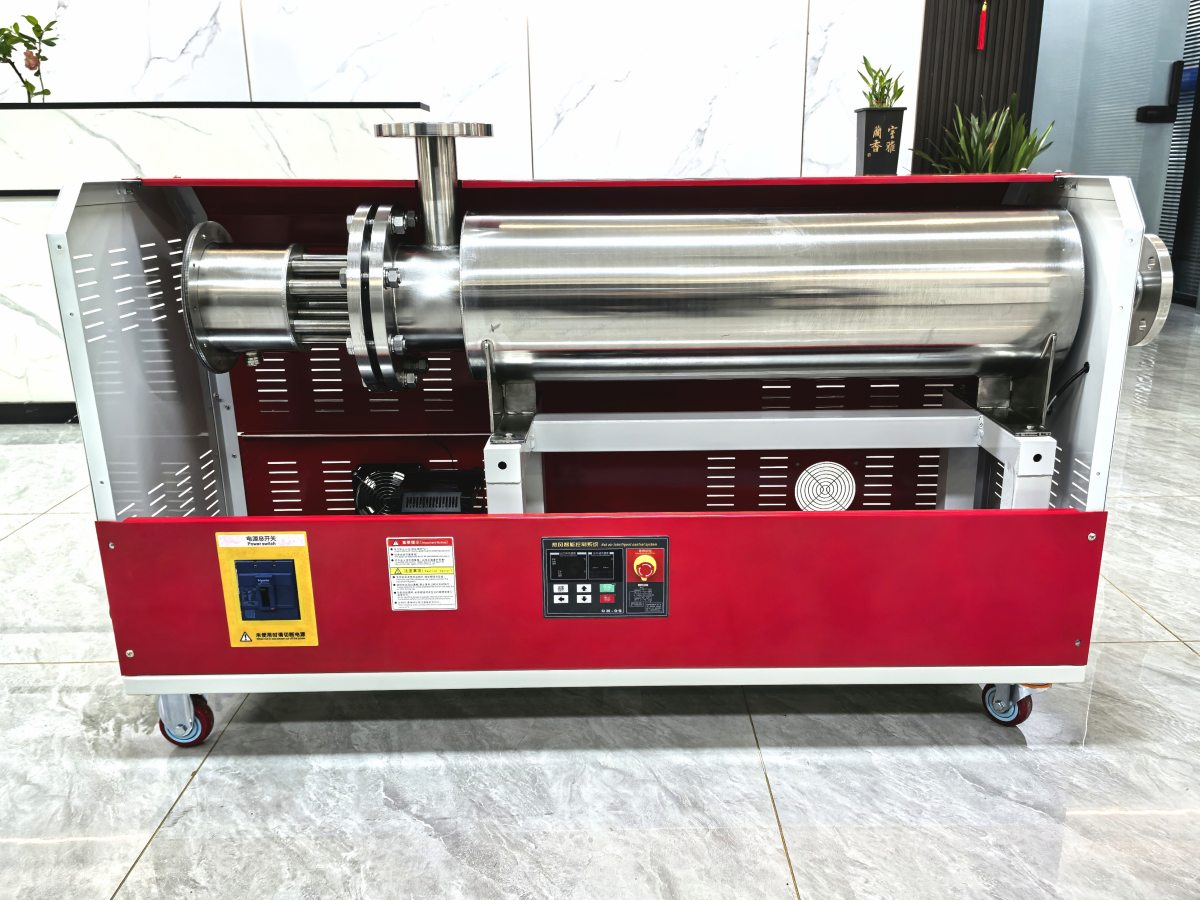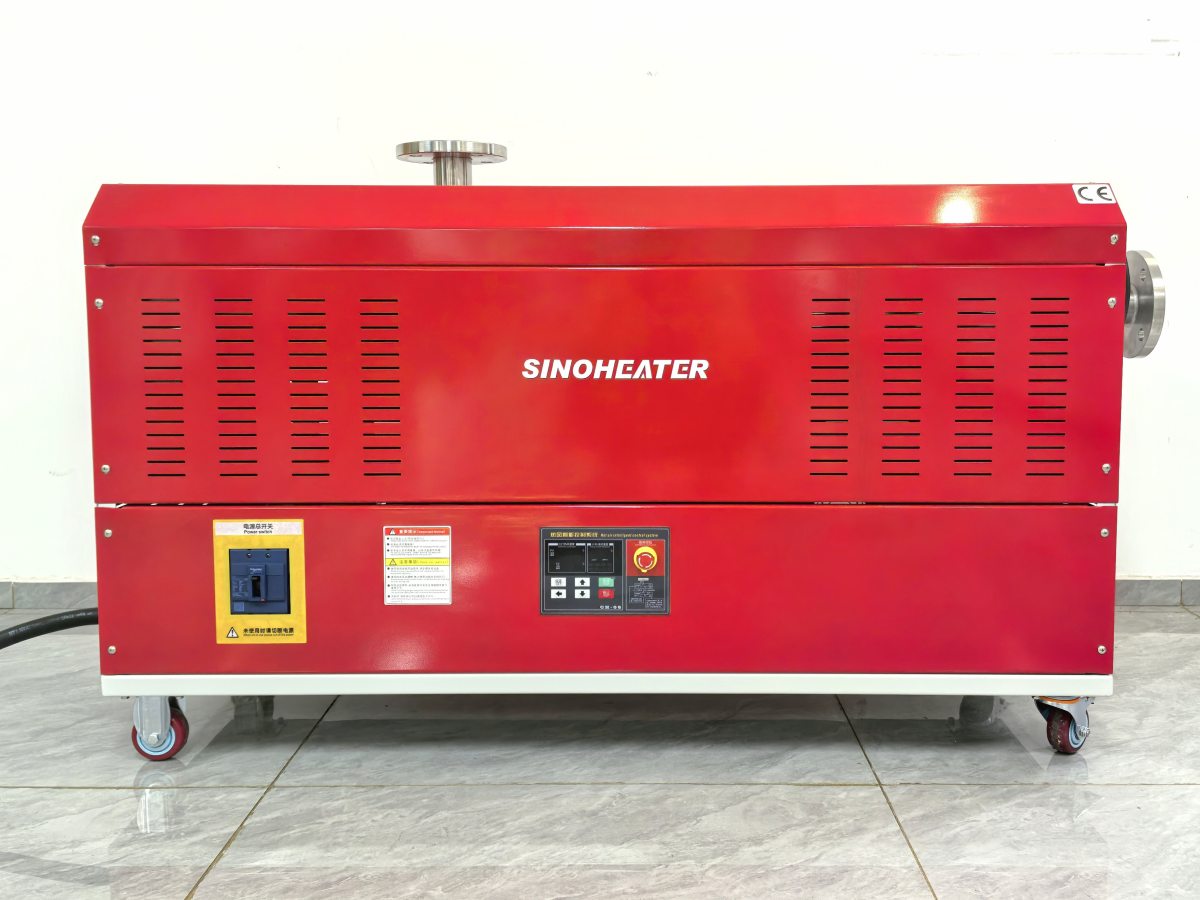
Vertical fixed industrial hot air blowers are engineered to support non-stop operation in demanding production environments, where consistent thermal output and long-term reliability directly impact workflow efficiency. Unlike portable units designed for intermittent use, these systems are built to maintain stable performance over thousands of operating hours without unexpected downtime.
Thermal Output Consistency Under Extended Load
The core trait of continuous working design lies in its ability to preserve uniform temperature delivery even when running 24 hours a day across multiple consecutive shifts. Internal thermal compensation mechanisms adjust heat element output dynamically to offset minor fluctuations in incoming air temperature and ambient workshop conditions. This prevents unexpected temperature drifts that could compromise curing, drying, or thermoforming processes on automated production lines. Even after weeks of uninterrupted operation, the outlet air temperature remains within narrow tolerance ranges that industrial process standards require.
Structural Durability for Non-Stop Runtime
Every critical component in these systems is selected and reinforced to withstand prolonged mechanical and thermal stress. Heavy-duty motor assemblies feature high-temperature class insulation that resists degradation from sustained electrical load and surrounding heat. The blower wheel is precision balanced to minimize vibration, eliminating the risk of fastener loosening or bearing wear that often occurs in intermittently used equipment. Heat-resistant internal wiring and reinforced connection points prevent electrical faults that would force unplanned shutdowns during critical production cycles.
Integrated Thermal Protection Hierarchy
Continuous operation does not mean unregulated exposure to risk. Multiple layers of automatic safety features work in tandem to monitor operating conditions without disrupting normal workflow. Over-temperature sensors placed near heating elements, motor windings, and air outlet paths trigger gradual power reduction instead of immediate full shutdown when abnormal readings are detected. This gives maintenance teams time to address minor issues during scheduled production breaks rather than halting the entire line unexpectedly. The protection system also logs runtime data to support predictive maintenance planning, further extending reliable continuous working periods.
Airflow Stability Across Long Operation Cycles
Even after months of non-stop use, the airflow volume and static pressure output remain consistent with initial performance specifications. The sealed air chamber design prevents gradual air leakage that would reduce effective heat delivery to target work zones. High-efficiency fan blades maintain their original aerodynamic shape under sustained warm air exposure, avoiding the airflow degradation common in consumer-grade units. This steady airflow ensures that heat distribution across materials stays uniform, supporting consistent processing results for every batch that moves through the production line.