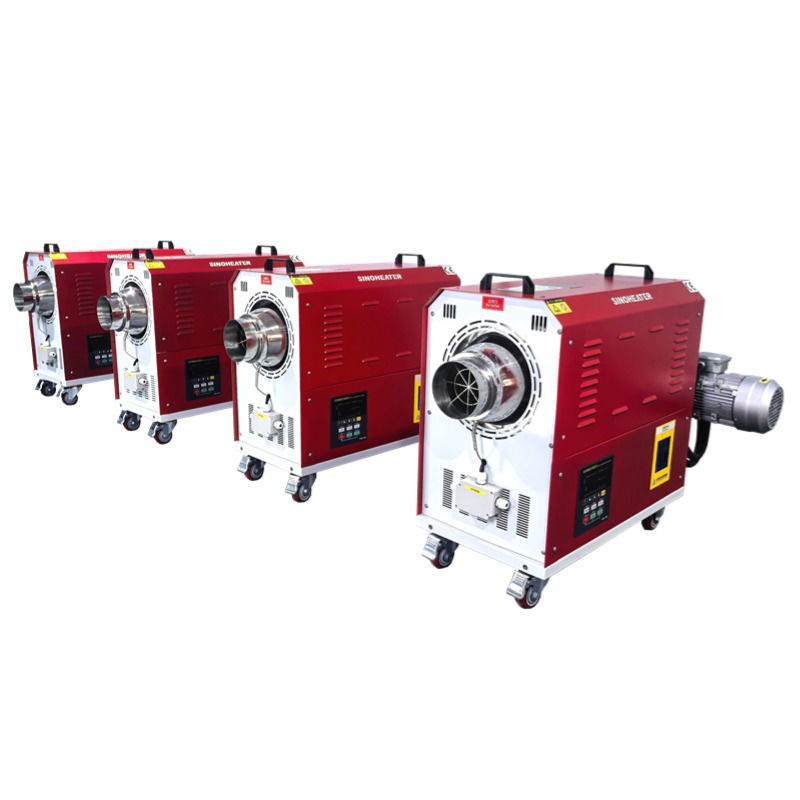
Achieving a precise match between a hot air blower’s air inlet and its dust cover is fundamental for maintaining optimal airflow, ensuring effective filtration and preventing performance issues. An incorrectly sized cover can lead to increased air resistance, dust bypass, or even physical damage to the blower’s internal fan.
Inlet Flange Dimensions and Cover Outer Frame
The dust cover’s outer frame must align perfectly with the dimensions and bolt pattern of the blower’s inlet flange. This ensures a flush, gap-free fit when the cover is secured in place. The frame is typically designed to overlap the flange by a specific margin, providing a sufficient sealing surface for the gasket. The holes in the frame for mounting fasteners are precisely sized and positioned to match the threaded inserts or through-holes on the inlet flange, allowing the screws or clips to engage smoothly without cross-threading or causing misalignment. A slight chamfer or guide feature on the inner edge of the cover frame often aids in initial positioning, helping the user align it correctly before tightening the fasteners.
Mesh Area and Effective Open Flow Area
The most critical dimensional aspect is the match between the dust cover’s mesh area and the blower’s required effective open flow area. The total open area of the mesh—calculated by subtracting the area blocked by the wire strands from the gross frontal area—must meet or exceed the blower’s air intake requirements. If the mesh is too fine or the open area is too small, it acts as a significant restriction, forcing the fan to work harder, reducing airflow, increasing noise, and potentially causing overheating. The mesh is stretched taut within its frame to maintain this open area consistently and to prevent sagging, which could partially block the inlet. The mesh pattern (e.g., grid size, wire diameter) is selected to provide the necessary dust stopping capability without becoming a flow bottleneck.
Gasket Channel and Compression Fit
A continuous channel or groove is integrated into the dust cover’s frame to house a sealing gasket. The cross-sectional dimensions of this channel and the gasket itself are designed as a matched set. The gasket, often made of foam or rubber, is slightly oversized. When the cover is fastened down, the gasket compresses uniformly to fill any microscopic imperfections between the cover frame and the inlet flange, creating an airtight seal around the entire perimeter. This seal is crucial; it prevents unfiltered air from being sucked in through gaps, which would allow dust to enter the blower directly. The compression is calculated so that the gasket seals effectively without requiring excessive force that could warp the cover frame or damage the inlet flange over many maintenance cycles.